


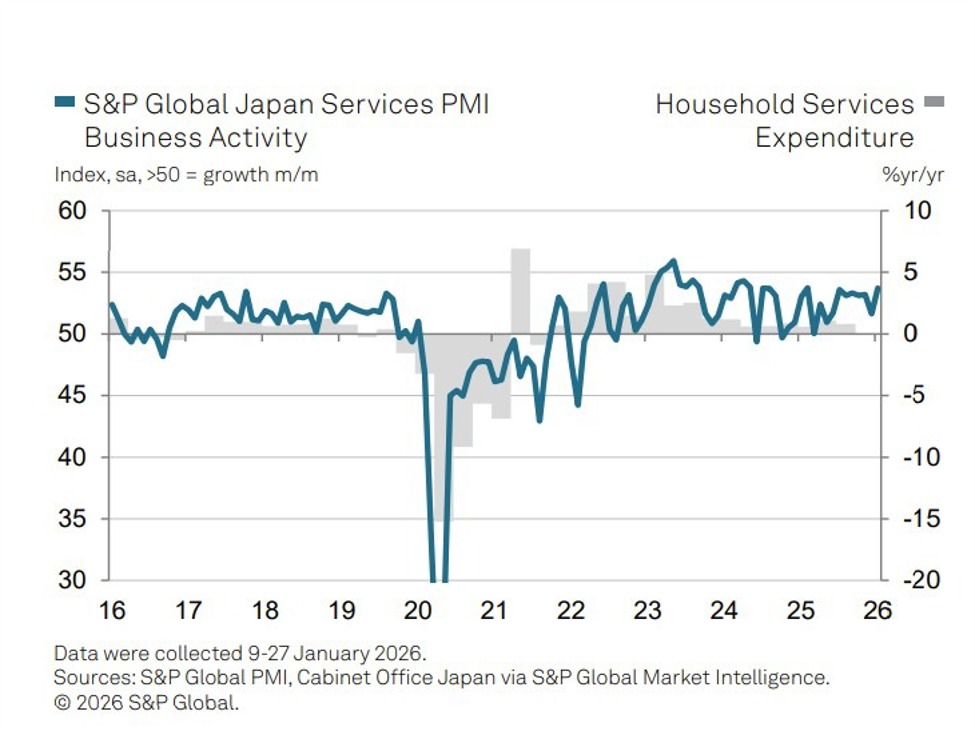

Japan’s services-led recovery gained pace in January, though confidence remains cautious despite easing cost pressures.
Summary
-
Japan’s services sector growth accelerated to an 11-month high in January
-
New orders and export demand strengthened alongside rising backlogs
-
Employment continued to expand as firms responded to higher workloads
-
Input cost inflation eased to its softest pace in nearly two years
-
Business confidence remained positive but softened amid global concerns
Japan’s services sector regained momentum at the start of 2026, with business activity expanding at its fastest pace in almost a year, according to the latest PMI data. The improvement was driven by firmer demand conditions, rising new orders and a continued expansion in employment, signalling a more durable recovery in the private sector.
The Services Business Activity Index climbed to 53.7 in January from 51.6 in December, marking the strongest reading since February last year and extending the sector’s growth run to ten consecutive months. The acceleration reflected a quicker rise in new business, which recorded its best performance in four months. Firms cited successful marketing efforts, new client wins and improving foreign demand as key drivers of the uptick in activity.
Growth was not uniform across sub-sectors. Finance and insurance firms continued to lead the expansion, while information and communication services lagged behind, posting the weakest growth. Even so, the overall picture pointed to broadening resilience across the services economy.
Stronger inflows of new work led to a further build-up in outstanding business, with backlogs rising at the fastest pace since September. To manage these higher workloads, companies continued to add staff. Although the pace of hiring eased slightly from December, employment growth remained solid, underlining ongoing capacity expansion across the sector.
Cost pressures showed signs of easing. Input prices rose at their slowest rate in nearly two years, providing some relief to margins. However, firms increased selling prices at a faster pace, pushing output price inflation to a seven-month high as service providers attempted to pass on higher costs where possible.
At the broader economy level, momentum also strengthened. The Composite PMI Output Index rose to 53.1 from 51.1, marking the fastest expansion in total private sector output since May 2023. The improvement was driven not only by stronger services activity but also by the first increase in manufacturing output since mid-2025. New orders across the private sector grew at their fastest pace since May 2024, while export business expanded for the first time in nearly a year.
Despite stronger current conditions, business sentiment softened. While firms remain broadly optimistic about the year ahead, confidence slipped to its lowest level since July, weighed down by concerns around global growth, weaker tourism trends, demographic challenges and persistent labour shortages.


