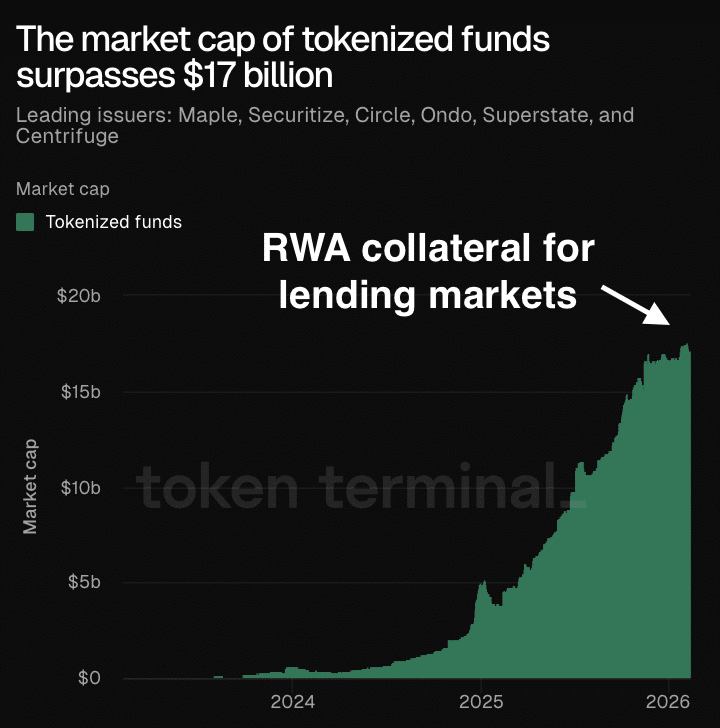




Ondo Finance’s expansion into Tokenized Treasuries and equities initially drove its RWA scale, lifting the TVL beyond $2.5 billion and concentrating liquidity within on-chain fixed-income and equity wrappers.
As issuance and secondary trading volumes grew, pricing infrastructure became a structural constraint. Tokenized equities relied on scattered or partly centralized oracle sources, which made their value information slow, vulnerable to manipulation, and inefficient during market fluctuations.
These data integrity frictions are directly limited to collateral usability across lending venues. To neutralize this bottleneck, Ondo Finance [ONDO] formalized Chainlink Data Feeds as its primary pricing layer. Standardized, multi-source valuations then made it possible for tokenized equities to become collateral-grade assets.
This integration will make it easier to accurately sell off assets, automatically adjust vaults, and carry out structured products. This makes the oracle partnership a necessary upgrade, instead of just a marketing strategy.
On-chain pricing rails activate for tokenized equities
Ondo’s tokenized equities moved deeper on the blockchain as Chainlink [LINK] Data Feeds were activated on Ethereum [ETH] on 11 February 2026. Real-time pricing, including dividends and splits, began securing assets like SPYon, QQQon, and TSLAon.
Consequently, these tokens gained DeFi collateral utility on platforms such as Euler. On-chain issuance then scaled through instant mint-burn rails, aligning supply with demand. Trading activity followed, pushing the cumulative volume beyond $7 billion while the TVL crossed $500 million.
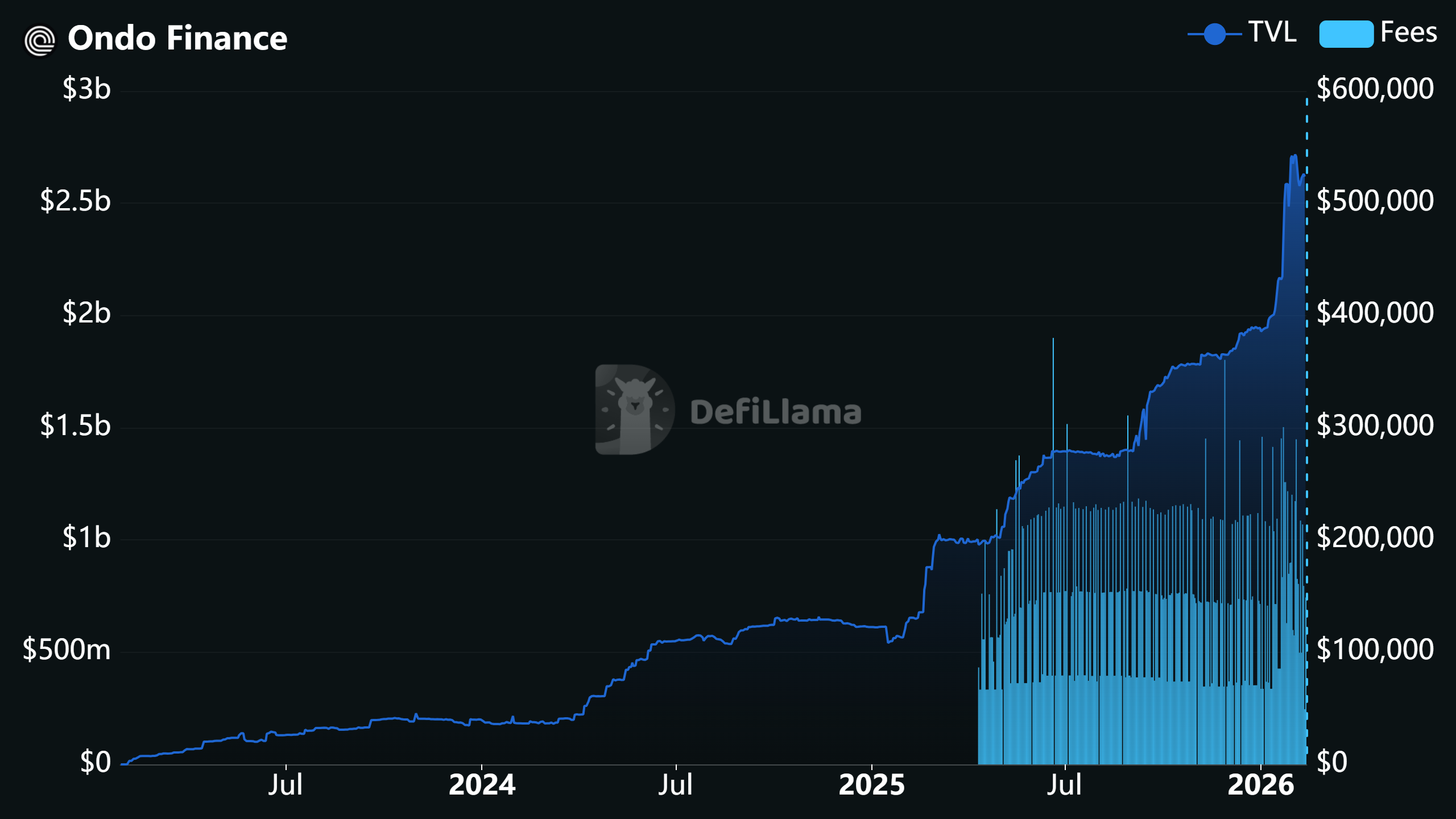
Source: DeFiLlama
Meanwhile, listings expanded to 200+ equities across multiple chains. This progression signaled a shift from pilot deployment to systemic infrastructure, strengthening liquidity depth, pricing integrity, and executable DeFi integration for tokenized real-world equities.