


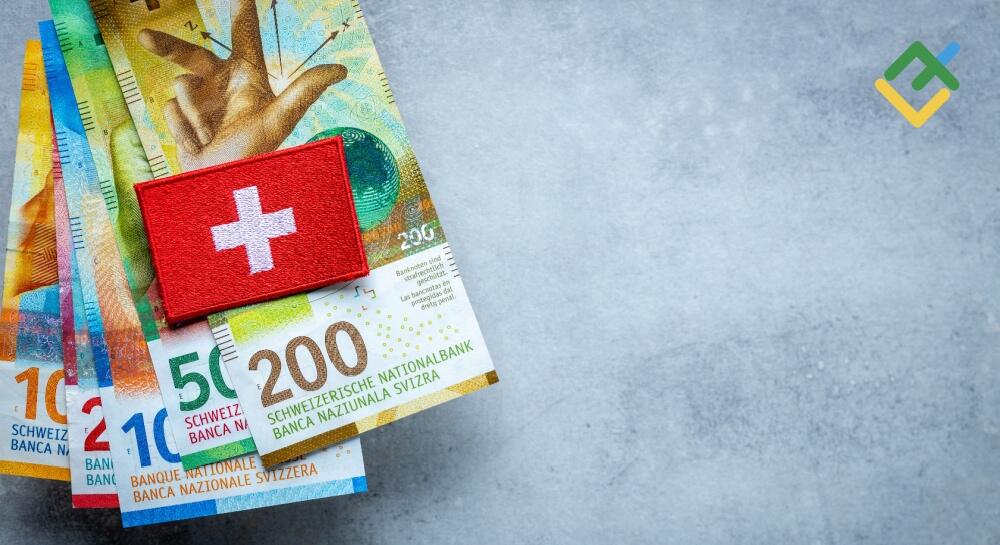


The strengthening of the franc is slowing inflation in Switzerland. The Swiss National Bank could halt the bearish trend on the USD/CHF pair by lowering interest rates or using currency interventions, but each option has its downsides. Let’s discuss this topic and make a trading plan.
The article covers the following subjects:
Major Takeaways
- The SNB does not want to return to negative rates.
- The US and Switzerland have ruled out manipulation.
- Deteriorating risk appetite is helping the franc.
- Short trades on the USD/CHF pair can be considered on a breakout of 0.7665.
Weekly Fundamental Forecast for Franc
If Americans have to cover the tariffs set by the US government, someone is forcing them to do so. The growth of Switzerland’s foreign trade surplus to a record high in 2025 does not align with the fact that US tariffs on this country were among the world’s highest. For a long time, it paid 39%, and only at the end of last year did Washington reduce the figure to 15% in exchange for investment in the US economy.
Swiss Balance of Trade
Source: Bloomberg.
Meanwhile, China also saw an increase in its trade surplus. The positive export trends in China and Switzerland serve as further evidence that if US tariffs are harming anyone, the only victim is the US economy. In the fourth quarter, it may slow down from 4.4% to 3%, according to the consensus forecast of Bloomberg analysts.
The slowdown in GDP growth and the correction of US stock indices favor USD/CHF bears. According to SNB head Martin Schlegel, most of the world’s economies have proven resilient to tariffs, and inflation in Switzerland will accelerate to 0.3% by the end of the year. According to forecasts, consumer prices will grow by a modest 0.1% in the first quarter. Therefore, the January CPI expansion by this amount is unlikely to force the central bank to lower rates.
Swiss Inflation
Source: Bloomberg.
Martin Schlegel noted that the bar for the SNB to return to borrowing costs below zero was high. It could do so if price stability were at risk. Fluctuations in inflation within the target range of 0–2% are unlikely to be such a case.
Another way to curb the strengthening of the franc is through currency interventions, which the SNB has resorted to on several occasions in the past. However, in September, the US and Switzerland reached an agreement not to manipulate their currencies. This circumstance, coupled with the SNB’s reluctance to return to negative rates, allows large banks to predict further strengthening of the Swiss franc.
According to ING, the central bank’s scope for action is limited. JP Morgan believes that markets are overestimating the risks of its intervention in the Forex market and recommends selling the EUR/CHF pair.
However, this is not the only factor helping USD/CHF bears. Falling US stock indices are dampening global risk appetite and increasing demand for safe-haven currencies. Along with the strengthening of the yen after the Liberal Democrats’ victory in the Japanese parliamentary elections, carry trade is gaining traction. The Swiss franc stands to benefit in both cases.
Weekly Trading Plan for USD/CHF
When the SNB’s hands are tied and the macroeconomic conditions are favorable, the Swiss franc remains strong. This creates grounds for selling the USD/CHF pair on a rebound from 0.7775 and 0.783, or on a breakout of the support level of 0.7665. The target level is 0.7355.
This forecast is based on the analysis of fundamental factors, including official statements from financial institutions and regulators, various geopolitical and economic developments, and statistical data. Historical market data are also considered.
Price chart of USDCHF in real time mode
The content of this article reflects the author’s opinion and does not necessarily reflect the official position of LiteFinance broker. The material published on this page is provided for informational purposes only and should not be considered as the provision of investment advice for the purposes of Directive 2014/65/EU.
According to copyright law, this article is considered intellectual property, which includes a prohibition on copying and distributing it without consent.


