


Australia’s February CPI cooled slightly to 3.7% y/y from 3.8%, with the monthly print coming in flat at 0.0%, just a touch softer than expected.
The trimmed mean rose 0.2% m/m, missing the 0.3% forecast, while the annual pace held at 3.3%.
This data came out before the U.S.-Iran war-driven energy shock, keeping inflation risks tilted to the upside and the Aussie under pressure.
Key Takeaways
- Headline CPI rose 3.7% in the 12 months to February, easing from 3.8% in January, with the monthly reading flat at 0.0%
- Trimmed mean inflation held steady at 3.3% annually, unchanged from January
- The largest annual contributors were Housing (+7.2%), Food and non-alcoholic beverages (+3.1%), and Recreation and culture (+4.1%)
- Electricity surged 37.0% over the year, primarily due to the expiry of Commonwealth and State Government energy rebates
- Data predates the Iran war’s energy shock; headline inflation is widely expected to push toward 5% in the coming months
Link to official ABS Australian Consumer Price Index (February 2026)
Housing remained the biggest annual driver, up 7.2%, with electricity prices surging 37.0% as government rebates rolled off. Automotive fuel, meanwhile, fell 7.2% on the year, still reflecting pre-Middle East conflict pricing.
The mix showed up in the broader breakdown. Services inflation held at 3.9%, goods eased to 3.5%, while non-tradables ticked up to 5.0%.
Even so, this snapshot may already be outdated. The report doesn’t yet capture the recent surge in energy prices, with headline inflation expected to climb toward 5% in the coming months.
All these help explain the RBA’s stance. The central bank just delivered its second straight rate hike, taking the cash rate to 4.1%, with Governor Michele Bullock warning that inflation remains too high and flagging concerns about second-round effects from rising energy costs.
Promotion: Master your trading psychology with AI-powered insights! TradeZella helps you track, backtest, and eliminate bad habits automatically! Click on the link and use code “PIPS20” to save 20%!
Disclosure: To help support our free daily content, we may earn a commission from our partners if you sign up through our links, at no extra cost to you.
Market Reactions
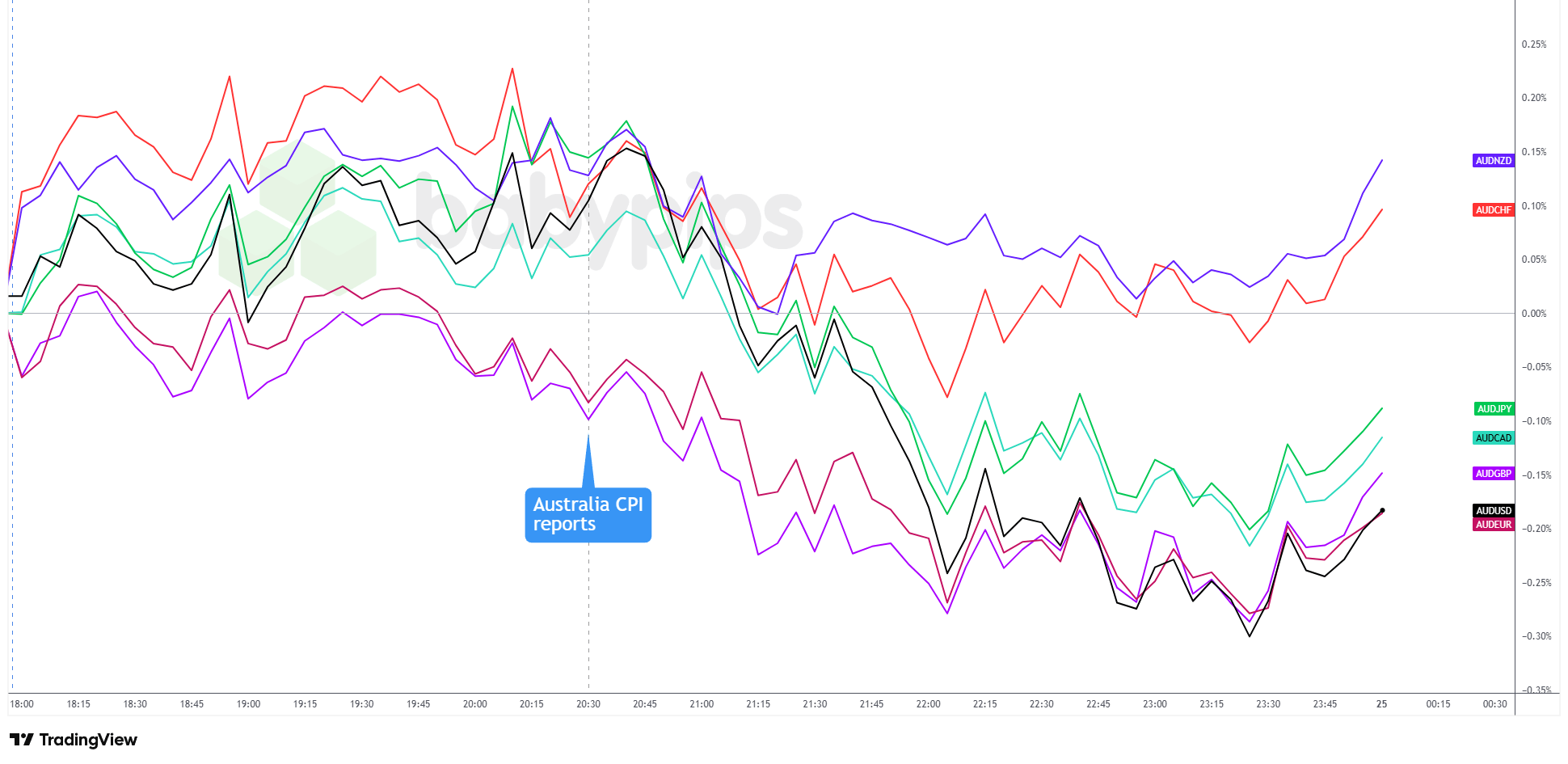
Australian Dollar vs. Major Currencies: 5-min
AUD Overlay 5-min – Chart Faster with TradingView
The Australian dollar, which leaned slightly bullish early in the day, briefly ticked higher after the sticky inflation print. However, AUD turned lower about 15 minutes later, then stayed on the back foot for roughly an hour and a half after the release.
AUD then settled into a range before picking up some bids ahead of the London open. Traders largely looked through the CPI since it predates the Iran conflict, which is expected to drive a sharp rise in fuel prices in the March report. The energy shock, not the February data, drove sentiment, with markets reluctant to hold AUD longs given the inflation risks ahead.
The Aussie is now back to a net bearish lean, with gains showing up only against the Swiss franc and the New Zealand dollar.
Promoted: Capitalize on Fed Volatility Without Risking Your Own Funds.
Expectations of sticky high inflation and a high interest rate environment in Australia kept AUD on the defensive early Wednesday. When the macroeconomic data shifts this fast, trading the volatility requires deep focus—and enough capital to make your edge count.
If you have the right fundamental bias but a restrictive personal account size, Funded Trading Plus can help. They offer evaluation packages starting at just $89.00. Prove your skills with simple, fair rules, and you can double your account every 10% up to $2,500,000.
Learn more about Funded Trading Plus! (for a limited time, use code “20CHAL” for 20% off on 1-Step & 2-Step Challenges, Up to $100k account size)
Disclosure: To help support our content, we may earn a commission from our partners if you sign up through our links, at no extra cost to you.