


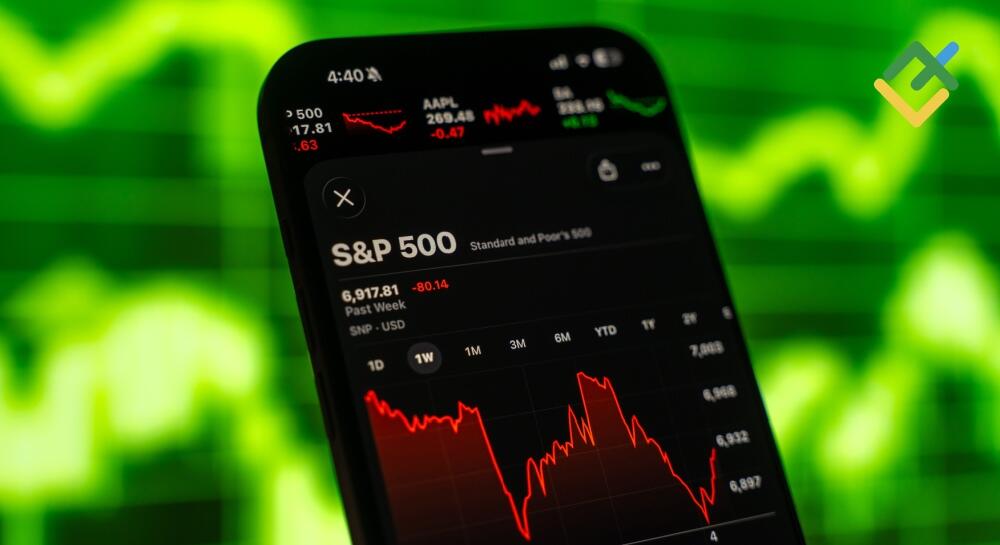


Donald Trump’s threats to bomb Iran’s energy infrastructure are unlikely to be carried out, as such actions would trigger an even sharper rise in oil prices. Tehran holds the upper hand in this standoff. Let’s discuss this and outline a trading plan for the S&P 500.
The article covers the following subjects:
Major Takeaways
- Markets are waiting for FOMO to kick in.
- The S&P 500 tends to rise at the start of the week and fall toward the end.
- Rumors of a 45-day truce are supporting equities.
- Short positions on rebounds from 6,620 and 6,665 remain relevant.
Weekly Fundamental Forecast for S&P 500
There is a fine line between fear and greed in the stock market. As soon as Donald Trump suggested that the Middle East conflict could end within 2–3 weeks, the S&P 500 posted its first weekly gain in six weeks. Investors remain on edge, anticipating the fear of missing out (FOMO), as the end of the conflict could trigger a wave of buying in stock indices.
Markets tend to follow patterns. The tariff hikes on “Liberation Day” in the US, followed by a sharp rally in the S&P 500, established a new behavioral pattern: a shift from TACO (Trump Always Chickens Out) to FOMO. Investors have learned to read the White House strategy. By escalating threats, Trump aims to force opponents to accept his terms. This approach worked during trade wars but is less effective with Iran.
Market Reaction to US Tariffs and the Middle East Conflict
Source: Bloomberg.
Tehran insists on its own terms and claims that Donald Trump is negotiating with himself. Iran’s firm stance is forcing prediction markets to lower the odds of a near-term resolution of the Middle East conflict, despite optimistic rhetoric from the White House.
If one pattern fails, another may emerge. In March, a clear weekly pattern was observed in the S&P 500. At the start of the week, the broad index tended to rise on positive news from Donald Trump. However, by Thursday and Friday, it often declined as investors reduced positions ahead of potentially aggressive weekend statements from the US president.
Patterns in S&P 500 Dynamics
Source: Bloomberg.
Thus, markets behave like morning optimists, starting the week on a positive note and ending it on a negative one. At the same time, rumors of negotiations between the US, Iran, and Middle Eastern intermediaries on a 45-day ceasefire, along with rising tanker traffic through the Strait of Hormuz, may lead to an upward gap in the S&P 500 at the start of the week.
In my view, such optimism may be premature. Iran continues to hold the upper hand in the Middle East conflict. Strikes on energy infrastructure are not in the US interest, as they would push oil prices higher and reduce global risk appetite. Donald Trump appears to be bluffing, which is met with skepticism in Tehran.
The end of the Middle East conflict could still be far off. A prolonged conflict will increase the risks of stagflation and recession in the US economy, keeping pressure on the stock market.
Weekly Trading Plan for S&P 500
Using the pattern “buy at the start of the week, sell at the end” allows traders to consider short positions in the S&P 500 on rebounds from resistance levels at 6,620 and 6,665. The risks of a decline in the broad index toward 6,100 and 6,000 remain.
This forecast is based on the analysis of fundamental factors, including official statements from financial institutions and regulators, various geopolitical and economic developments, and statistical data. Historical market data are also considered.
Price chart of SPX in real time mode
The content of this article reflects the author’s opinion and does not necessarily reflect the official position of LiteFinance broker. The material published on this page is provided for informational purposes only and should not be considered as the provision of investment advice for the purposes of Directive 2014/65/EU.
According to copyright law, this article is considered intellectual property, which includes a prohibition on copying and distributing it without consent.


