



Investor turns bullish on Japan bonds and yen after election clarity.
Summary:
-
Bloomberg reports Nash turns bullish on JGBs, buying 10-year bonds after election clarity.
-
Political stability seen as catalyst, with yields falling sharply since Takaichi’s win.
-
Yen bought versus dollar and sterling, marking strategic FX repositioning.
-
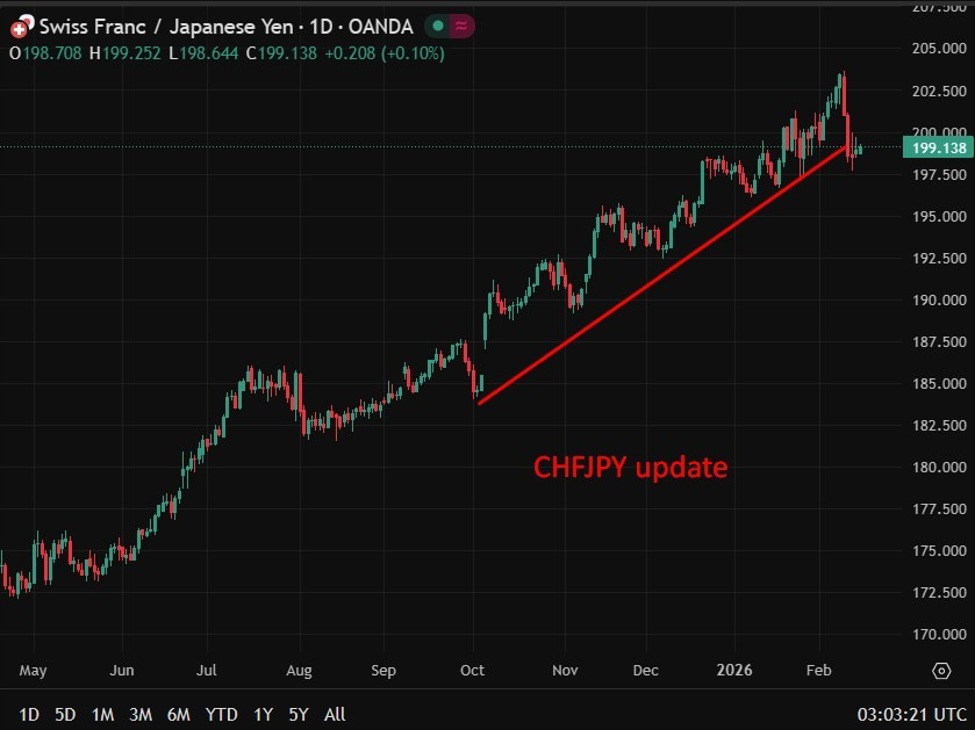
Forecast 8–9% yen appreciation, particularly against the Swiss franc.
-
Shift reflects diversification away from US assets amid policy uncertainty.
A prominent global bond investor has turned bullish on Japanese government bonds and the yen following Prime Minister Sanae Takaichi’s decisive election victory, arguing that the removal of political uncertainty marks a turning point for Japan’s markets.
According to Bloomberg, Mark Nash of Jupiter Asset Management has bought 10-year Japanese government bonds (JGBs), closing a long-standing short position and positioning for a sustained rally. He views Takaichi’s strong mandate as a stabilising force that provides policy clarity and reduces concerns about fiscal and monetary direction.
Japanese bond yields had climbed to multi-decade highs amid rising global rates and domestic political uncertainty. However, since the election, long-dated yields have fallen sharply, with the 30-year yield dropping around 40 basis points in less than a month as investors reassessed risk. Nash argues that the clarity provided by the election outcome has shifted sentiment at the long end of the curve.
Alongside the bond call, Nash is making an explicit foreign exchange bet. He has bought the yen against both the US dollar and sterling and is forecasting a significant appreciation against the Swiss franc. He sees potential for the yen to strengthen by 8% to 9% versus the franc and other currencies, arguing that Japan’s fiscal and political backdrop now compares more favourably with traditional safe-haven peers.
The shift marks a notable reversal in strategy. Nash had previously maintained a short position in Japanese debt, benefiting from rising yields as policy normalisation gathered pace. His fund returned 7.6% over the past year, ranking strongly among peers.
The broader thesis rests on the view that Japan’s political stability, combined with clearer policy direction and improving investor confidence, could attract foreign capital at a time when uncertainty around US policy encourages diversification away from dollar assets.
If the yen’s long-standing underperformance reverses meaningfully, it would represent a structural change in global currency positioning.


