


The Reserve Bank of Australia (RBA) raised its cash rate by 25 basis points to 4.10% at its March meeting, delivering a second consecutive rate hike as stubbornly high inflation and rising energy costs from the Middle East conflict tilted risks further to the upside.
The decision passed by the narrowest possible margin — 5 votes to 4 — which ultimately weighed on the Australian dollar despite the tightening move.
Key Takeaways
- RBA raised interest rates by 25 bps to 4.10%, marking the first back-to-back hike since mid-2023
- The decision passed in a 5-4 vote, the closest vote since the RBA began disclosing tallies
- Gov. Bullock clarified the split was about timing, not direction — all members agreed another hike was needed
- The board cited a material risk that inflation will remain above target for longer than anticipated, with the conflict in the Middle East adding further upside risk via sharply higher fuel prices
- Trimmed mean CPI stood at 3.4% y/y in January, with monthly CPI at 3.8% — both above the RBA’s 2%–3% target band
- Q4 2025 GDP came in at 2.6% annually, above the RBA’s estimated 2% speed limit, while the unemployment rate held near 4.1%
- Markets pared back bets on a May follow-up hike to roughly 25–30% following the close vote, down from around 70% prior to the decision
Link to Reserve Bank of Australia Monetary Policy Statement (March 2026)
The March decision reflected persistent domestic inflation and rising energy-driven price pressures tied to the US-Iran conflict. Inflation picked up in the second half of 2025, and recent data showed more-than-expected excess demand, with Q4 GDP at 2.6%, labor underutilization near historic lows, and inflation expectations climbing to 5.2% in March.
The Middle East conflict added another layer, with oil jumping from around $56 to over $100 in under three weeks, raising the risk of broader inflation pressures. Still, Governor Bullock made it clear that fuel costs were not the main issue, as inflation was already running too hot, and warned that failing to act could entrench price pressures, even acknowledging that a recession may be needed, though not desired.
Link to RBA Gov. Bullock’s Press Conference (March 2026)
In her press conference, RBA Gov. Bullock clarified that the split vote reflected disagreement over timing rather than direction.
Members who voted to hold still acknowledged the need for a future rate increase — Bullock described their position as voting to hold “in a hawkish sense.” All nine members agreed another hike was warranted; the debate was simply whether March or May was the right moment.
Promotion: Master your trading psychology with AI-powered insights! TradeZella helps you track, backtest, and eliminate bad habits automatically! Click on the link and use code “PIPS20” to save 20%!
Disclosure: To help support our free daily content, we may earn a commission from our partners if you sign up through our links, at no extra cost to you.
Market Reactions
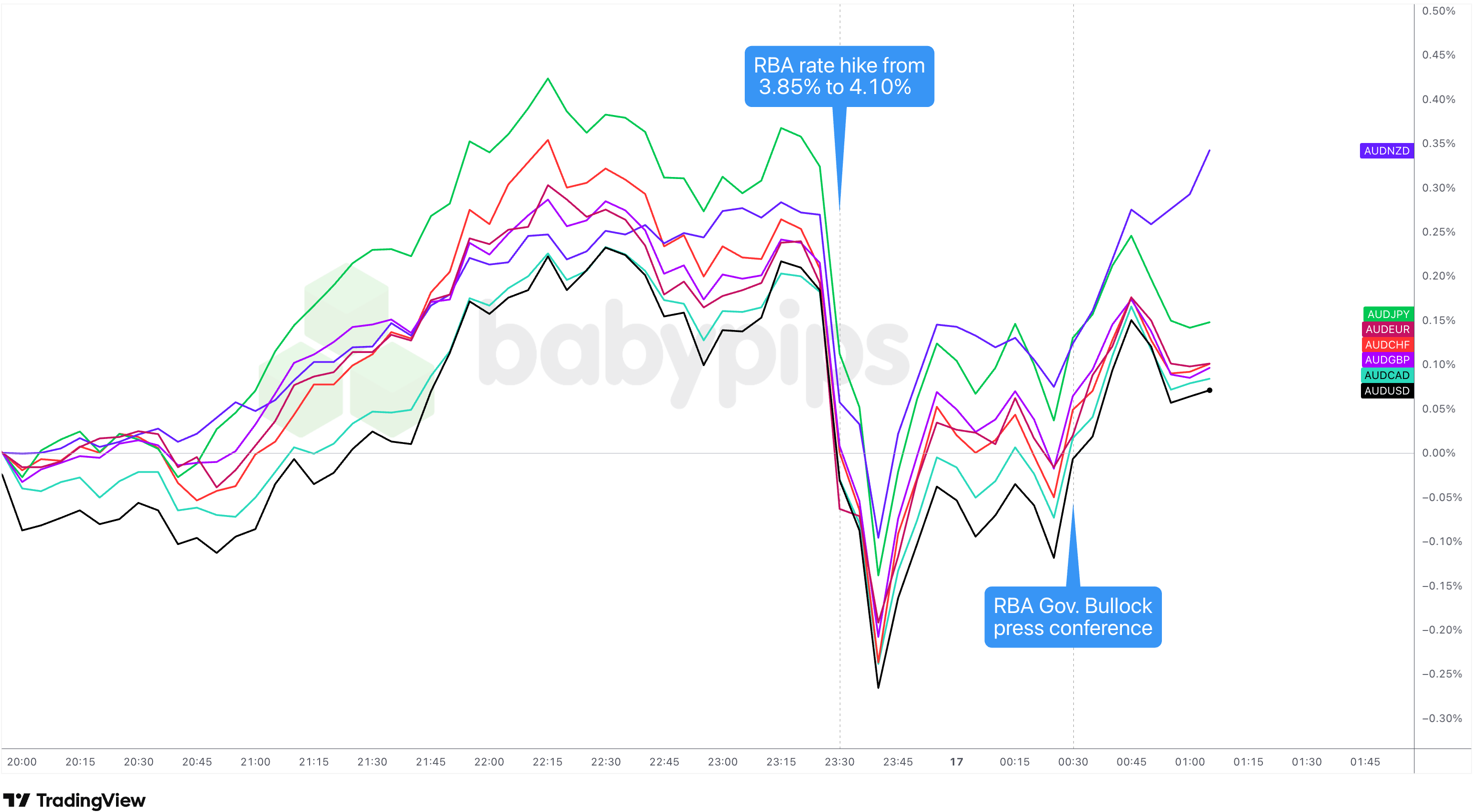
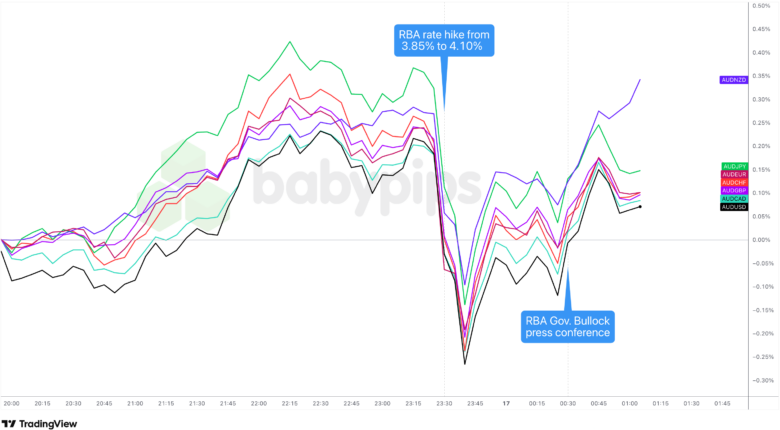
Australian Dollar vs. Major Currencies: 5-min
Overlay of AUD vs. Major Currencies Chart Faster with TradingView
The Australian dollar had been trending higher across the board into the Asian session ahead of the decision, likely reflecting positioning for the widely expected hike.
That move reversed sharply on the announcement, with AUD selling off across all pairs. AUD/USD led the drop, falling around 0.25% as the tight 5 to 4 vote triggered aggressive repricing of the May outlook, with follow-up hike odds sliding from roughly 70% to around 25 to 30%.
AUD began clawing back losses about 15 minutes after the release and into early London trade around Bullock’s presser, with most pairs recovering part of the initial move.
AUD/NZD stood out as the top performer, pushing up around +0.35%, while AUD/USD lagged, likely held back by broader USD strength tied to safe haven demand amid ongoing Middle East tensions.