


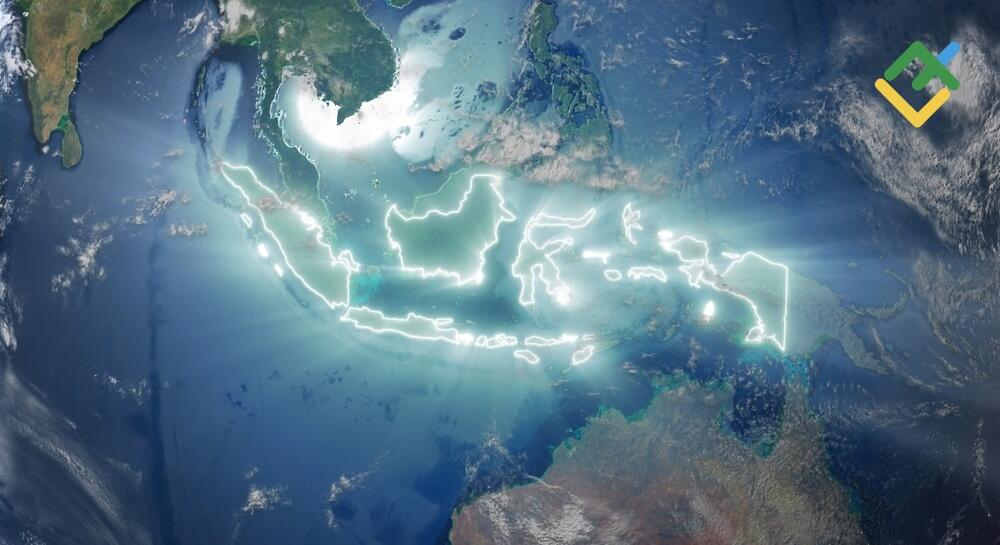


The richest person in Indonesia embodies the economic power of Southeast Asia’s largest country. Rapid GDP growth, digital infrastructure expansion, data center development, and aggressive foreign investment are transforming Jakarta into one of the region’s key financial hubs. Much of this wealth has traditionally come from coal and nickel mining, banking, and the consumer sector.
Many of Indonesia’s wealthiest individuals are self-made entrepreneurs who have built diversified business empires in highly competitive markets. Forbes regularly updates estimates of their net worth, offering a clear snapshot of shifting fortunes and who currently ranks among the country’s richest.
The article covers the following subjects:
Major Takeaways
- The Hartono brothers, Robert Budi and Michael, heirs to the Djarum tobacco empire, top the list of Indonesia’s richest people.
- The banking sector underpins many of the country’s largest fortunes. A controlling stake in Bank Central Asia (BCA), one of Indonesia’s most highly capitalized banks, makes up a significant share of Indonesian billionaires’ wealth.
- The commodities sector remains the backbone of many multi-billion-dollar fortunes. Coal, nickel, palm oil, and other natural resources have long been the foundation of wealth in Indonesia.
- Rags-to-riches stories are common in Indonesia. Many of the country’s richest individuals are self-made, starting small and building their businesses with limited capital and no family connections.
- Manufacturing and the growth of domestic industries are driving key sectors such as metallurgy, petrochemicals, and agriculture.
- Digitalization is attracting new capital. Leading conglomerates are actively investing in data centers, financial technology, and digital platforms, diversifying their portfolios amid economic growth.
- The combined wealth of Indonesia’s billionaires amounts to hundreds of billions of dollars, highlighting the growing influence of the country’s business sector in Southeast Asia.
Who Is the Richest Man in Indonesia?
According to Forbes, Indonesia’s richest people are the Hartono brothers, Robert Budi and Michael. They top the national rankings and are among the most influential business figures in Southeast Asia.
Their combined net worth exceeds $45 billion, keeping them among the world’s wealthiest for many years. The primary source of their fortune is their controlling stake in Bank Central Asia (BCA), Indonesia’s largest private bank, shaping the country’s financial landscape.
However, their business extends well beyond banking. They also own the Djarum tobacco empire, one of Indonesia’s oldest and most recognizable brands. The Hartono brothers invest actively in digital technology, real estate, and financial and infrastructure projects. Their diversified portfolio helps them weather economic downturns and grow their wealth.
The title of Indonesia's richest person belongs not to an individual, but to a family duo. Their story shows how financial discipline, a strong sense of market trends, and effective management can generate extraordinary financial results.
Top 10 Richest People in Indonesia
Indonesia ranks among Southeast Asia’s largest economies, fueled by rapid business growth and soaring investment. This momentum has produced a new wave of ultra-wealthy entrepreneurs, whose success is built on decades of work in fields like energy, finance, technology, and real estate. Here, we spotlight Indonesia’s ten richest individuals, their top assets, and their impact on the nation’s economy.
R. Budi & Michael Hartono
Robert Budi Hartono (1941) and Michael Bambang Hartono (1939–2026) grew up in Semarang in an entrepreneurial Chinese-Indonesian family. After their father passed away and a factory fire in 1963, the brothers rebuilt the Djarum tobacco business and turned it into one of Indonesia’s top cigarette brands. In 2002, they bought a controlling stake in Bank Central Asia, making it the centerpiece of their business empire.
The conglomerate includes the Polytron electronics brand, the Blibli e-commerce platform, high-end real estate, palm oil plantations, and even the Italian football club Como. Robert Budi is also well known for his support of badminton. His club has produced numerous Olympic champions. With a combined fortune estimated at $45–$48 billion, the brothers have remained at the top of Indonesia’s rich list for more than two decades.
Michael Bambang Hartono passed away on March 19, 2026, at the age of 86. Following his death, Robert Budi Hartono became Indonesia’s richest person. However, his fortune remains significantly smaller than that of Elon Musk.
Prajogo Pangestu
Prajogo Pangestu, born in 1943 in Palembang, is an Indonesian billionaire whose fortune comes from petrochemicals and energy. He started in timber before moving into oil and gas in the 1970s. Today, he leads Chandra Asri Pacific, the country’s top petrochemical producer, which is a core asset of Barito Pacific Group. Moreover, he controls Barito Renewables Energy, focused on geothermal and renewable energy, as well as a growing portfolio of energy and mining companies.
Pangestu is famously private, rarely giving interviews or appearing in public. Yet his impact on the Indonesian industry is huge. Through his companies, he drives projects in hydrocarbon processing, polymer production, and clean energy development.
Pangestu’s fortune is estimated at $25–$30 billion, making him one of the wealthiest people in Indonesia and Southeast Asia.
Widjaja Family
The Widjaja family is one of Indonesia’s most influential business dynasties, best known for building the Sinar Mas Group. Eka Tjipta Widjaja (1922–2019) started with a small trading business in Makassar and, over the decades, grew it into a major diversified conglomerate.
Eka Tjipta Widjaja built his empire from scratch and lived nearly a century. Today, the company is run by the third generation: Frankie Widjaja leads finance, Anderson Tanoto handles strategic development and international projects, and Aaron Levine drives digital transformation.
The group’s core assets are in palm oil, with Golden Agri-Resources publicly listed on the Singapore Stock Exchange.
The business also includes the pulp and paper division Asia Pulp & Paper, the real estate development platform Sinar Mas Land, and financial services through Sinar Mas Multiartha, whose shares are traded on the Indonesia Stock Exchange, listing some of the country’s most valuable companies.
The Widjaja family’s net worth is estimated at $8–$12 billion. The company focuses on vertical integration, generating value-added domestically, and meeting global environmental standards. This approach helps the group remain one of the leading players in Southeast Asia’s agribusiness industry.
Low Tuck Kwong
Low Tuck Kwong is an Indonesian billionaire of Chinese descent who built his fortune in the coal mining industry. Born in 1948, he began his career in trading before shifting to coal mining in Kalimantan in the 1990s. Today, he controls Bayan Resources, one of Indonesia’s largest thermal coal producers, which is listed on the Indonesia Stock Exchange.
Low Tuck Kwong’s business is a major part of Indonesia’s energy sector, generating significant coal export revenue from shipments to China, India, and other Asian markets. Bayan Resources stands out among energy stocks due to its low-cost open-pit mining operations.
Low Tuck Kwong is one of the most influential figures in the commodities sector. His wealth is valued at $15–$20 billion, placing him among the richest Indonesian people.
Anthoni Salim & Family
Anthoni Salim leads the Salim Group, one of Indonesia’s oldest and most diversified conglomerates. He took over the business in 2012 after the death of his father and founder, Liem Sioe Liong.
The family’s key assets include Indofood, one of the world’s largest instant noodle producers with vertically integrated food operations, and Indomaret, Indonesia’s largest convenience store chain with over 20,000 outlets. The group is also active in agribusiness, infrastructure, and investment.
The family invests in digital technology, logistics hubs, and renewable energy. The Salims’ combined net worth is estimated at $8–$12 billion, ranking them among Indonesia’s most influential entrepreneurs.
Otto Toto Sugiri
Otto Toto Sugiri is a self-made Indonesian billionaire, technology entrepreneur, and one of the country’s pioneers in digital infrastructure. Born in Jakarta, he holds a degree in computer science. His career in the IT sector began in the 1990s. In 2012, he founded DCI Indonesia, which is now the largest data center operator in Southeast Asia.
Led by Sugiri, DCI Indonesia established a network of data centers in Jakarta, Batam, and other locations, serving international cloud providers, financial institutions, and government organizations.
Sugiri is known as an advocate for data sovereignty. He promotes the idea of storing critical information within the country. His net worth is valued at $1.5–$2.5 billion, making him one of the biggest players in Indonesia’s tech sector.
Tahir
Tahir is an Indonesian billionaire and the founder of the Mayapada Group, a conglomerate operating within the financial and healthcare sectors. Born in 1952 in Surabaya, he got his start in the banking industry and, in 1989, launched his own business, which eventually grew into a group of companies.
Tahir’s key assets include Mayapada International Bank, the Mayapada Hospital network, premium real estate development projects, and media assets. His fortune is estimated at $2–$3 billion, making him an influential entrepreneur in Indonesia’s service sector.
Through the Tahir Foundation, he sponsors education programs, medical initiatives, and social welfare projects. Today, he focuses on developing human capital.
Marina Budiman
Marina Budiman is a self-made entrepreneur, Indonesian billionaire, and co-founder of DCI Indonesia, one of Southeast Asia’s leading data center operators. Born in 1962, she began her entrepreneurial journey in 1994, partnering with Otto Toto Sugiri to launch PT Indointernet (Indonet), Indonesia’s first internet service provider. This venture later evolved into what is now known as DCI Indonesia.
In early 2025, Budiman’s wealth surged, with her net worth rising by about $350 million a day for several weeks, briefly making her Indonesia’s richest woman. Forbes estimates her fortune at $6.3 billion. Besides, she joined the world’s 50 richest women in 2025.
She invests in cloud infrastructure, green cooling technologies, and connections to international fiber-optic networks. Her story demonstrates how prioritizing the digital economy’s infrastructure can generate significant capital.
Sri Prakash Lohia
Sri Prakash Lohia is an Indonesian billionaire of Indian descent, the founder and chairman of Indorama Corporation, a global manufacturer of polymers and chemical products. Born in 1952 in India, he moved to Indonesia in the 1970s and began with a small textile business, which eventually turned into one of the largest polyester and PET resin processors.
Under Lohia’s leadership, Indorama built plants in 20 countries, including Indonesia, Thailand, India, the US, and European countries. Its key business areas include the production of synthetic fibers for the textile industry, beverage packaging, and technical materials for the automotive sector.
Lohia is a proponent of the circular economy. He invests in plastic recycling technologies and efforts to reduce the carbon footprint of manufacturing. His net worth is estimated at $2–$4 billion, ranking him among the most influential players in Southeast Asia’s chemical industry.
Wijono & Hermanto Tanoko
Wijono and Hermanto Tanoko are the entrepreneurial brothers behind the Wings Group conglomerate, one of Indonesia’s largest manufacturers of consumer goods. Starting with a small soap factory in Surabaya in the 1980s, they built a business in household chemicals, personal care products, and food.
Their strategy relies on offering affordable mass-market products. The So Klin, Daia, Mie Sedaap, and Wings Care brands are available in millions of retail outlets across the country. Thanks to their understanding of local preferences and an effective sales network, Wings Group successfully competes with international corporations.
The assets of Wijono and Hermanto Tanoko are estimated at $4–$6 billion, which makes them prominent representatives of Indonesia’s manufacturing sector. Their success is directly linked to the growth in domestic demand and the expansion of the middle class.
Key Industries Behind Indonesia’s Richest Billionaires
Indonesia’s largest fortunes are concentrated in several industries.
Firstly, the energy sector and resource extraction. Coal, nickel, oil, and natural gas remain the cornerstone of the Indonesian economy and its most important exports. It was in this sector that Prajogo Pangestu and Low Tuck Kwong made their wealth.
Secondly, the banking sector and financial services. The Hartono family’s control over major private banks, such as Bank Central Asia, generates a steady income and influences the country’s economic growth.
Thirdly, agribusiness, especially palm oil production, plays a major role. Indonesia is the world’s largest exporter of palm oil, and prominent business families such as the Widjaja (Sinar Mas) and Salim groups have built fully vertically integrated operations around it.
The fourth sphere is technology and digital infrastructure. The expansion of the internet and the demand for cloud services are driving investment in data centers, fintech, and e-commerce. The examples of Marina Budiman and Otto Toto Sugiri demonstrate how digital infrastructure projects yield global-scale returns.
Therefore, Indonesia’s wealthiest people are mainly involved in natural resource extraction, the financial sector, and technological innovation. These sectors shape the Indonesian business landscape and reflect the country’s strategic development priorities.
Conclusion
Becoming the richest person in Indonesia requires not only entrepreneurial success but also skillful capital management and timely asset diversification. The country’s leading billionaires found their conglomerates at the intersection of traditional and emerging sectors of the economy. Their wealth is driven by entrepreneurial acumen and by the broader level of Indonesia’s economic development.
Many of these entrepreneurs are classic examples of self-made success stories. They started small and achieved significant results thanks to their perseverance, vision, and adaptability. This underscores the country’s great potential and openness to new players.
Amid growing global competition, Indonesia is strengthening its position in Southeast Asia, whilst its billionaires are fuelling economic growth by providing jobs, introducing new technologies, and helping local companies expand into international markets.
Richest Man in Indonesia FAQs
The content of this article reflects the author’s opinion and does not necessarily reflect the official position of LiteFinance broker. The material published on this page is provided for informational purposes only and should not be considered as the provision of investment advice for the purposes of Directive 2014/65/EU.
According to copyright law, this article is considered intellectual property, which includes a prohibition on copying and distributing it without consent.


