

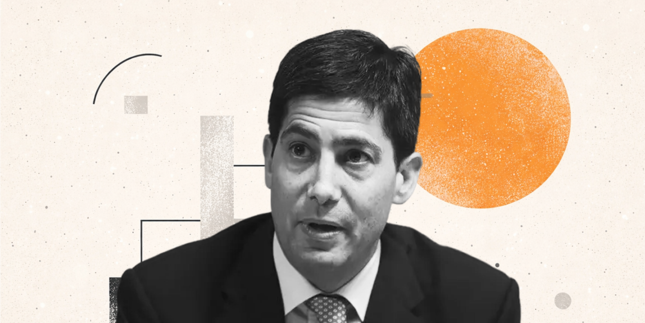

Kevin Warsh, United States (US) President Donald Trump’s nominee to replace Jerome Powell as the next chair of the Federal Reserve (Fed), told the Senate Banking Committee that fundamental policy reforms are needed.
Key takeaways
“No more pressing question than cost of living.”
“We are dealing with the legacy of Fed’s policy errors.”
“Need regime change.”
“Need new inflation framework.”
“Need to use tools differently.”
“Interest rate tool is fairer.”
“Need new communications.”
“We try to keep politics out of the Fed.”
“Fed has wandered outside of remit in recent years, I won’t do that.”
“Fed holds onto its forecasts longer than it should.”
“Price stability should be a change in prices so that no one is talking about it.”
“Independence is critically important but must be earned.”
“Independence earned by delivering on promises.”
“Essential that Fed officials can change their minds.”
“If mistakes are made, central bankers must correct them fast.”
“I don’t believe in forward guidance.”
“The Fed will have to dig deep in upcoming meetings.”
“Skeptical of forward guidance.”
“The supply side of the economy is changing dramatically.”
“Monetary policy works with lags.”
“I think the inflation trend is quite favorable.”
“My broad sense is inflation risk has improved somewhat.”
“I’m most interested in underlying inflation rate.”
“The data being used to judge inflation is quite imperfect.”
“We need to see what real inflation rate is.”
“I don’t agree that inflation overshoot is due to tariffs.”
“Fed’s inflation task could ease over time.”
“Due to AI’s impact, revisiting the Fed’s models is crucial.”
“Limited time to reduce inflation.”
“Tends to prefer chaotic meetings, family disputes.”
“Too many Fed officials opine in advance on rate path.”
“Told Trump using rates is better than buying bonds.”
“Fed needs to get out of the fiscal business.”
“A smaller ballance sheet would mean rates could lower, inflation get better, economy stronger.”
This section below was published as a preview of Fed Chair nominee Kevin Warsh’s testimony at 09:00 GMT.
- Fed Chair nominee Warsh will testify on Tuesday.
- Warsh’s prepared remarks highlight his commitment to Fed’s independence.
- Investors are likely to remain focused on US-Iran news.
Kevin Warsh, United States (US) President Donald Trump’s nominee to replace Jerome Powell as the next chair of the Federal Reserve (Fed), will testify before the Senate Banking Committee on Tuesday.
According to Warsh’s prepared remaks released on Monday, he will tell lawmakers that he is “committed to ensuring that the conduct of monetary policy remains strictly independent.”
Warsh will argue that a reform-oriented Fed can make a real difference and underscore that he is committed to “working with the administration and congress on non-monetary matters that are part of the Fed’s remit.”
After delivering his prepared remarks, Warsh will respond to questions from the members of the Senate Banking Committee.
The CME FedWatch Tool currently shows that markets are pricing about a 60% probability of the Fed leaving the policy rate unchanged at 3.5%-3.75% at end-2026. Back in January, around the time when Warsh was officially nominated for the position, markets were forecasting three 25 basis points interest-rate cuts this year. Since then, expectations have changed dramatically, due to surging crude Oil prices feeding into inflation fears after the US and Israel carried out a joint operation against Iran.
Although Warsh is likely to be asked about potential policy-easing steps in the near future, he could refrain from offering any preferences, given the uncertainty surrounding the situation in the Middle East. Hence, the market reaction to Warsh’s testimony could remain muted, with investors staying focused on US-Iran news.
US President Trump said on Monday that an extension to the US-Iran ceasefire, which is due to expire this Wednesday, was “highly unlikely.” Although there are reports suggesting that the second round of talks between the US and Iran could take place before the deadline, Mohammed Bagher Ghalibaf, Iran’s chief negotiator and parliament speaker, said that they will not accept negotiations “under the shadow of threats,” and added that they have been preparing “to reveal new cards on the battlefield.”
Fed FAQs
Monetary policy in the US is shaped by the Federal Reserve (Fed). The Fed has two mandates: to achieve price stability and foster full employment. Its primary tool to achieve these goals is by adjusting interest rates.
When prices are rising too quickly and inflation is above the Fed’s 2% target, it raises interest rates, increasing borrowing costs throughout the economy. This results in a stronger US Dollar (USD) as it makes the US a more attractive place for international investors to park their money.
When inflation falls below 2% or the Unemployment Rate is too high, the Fed may lower interest rates to encourage borrowing, which weighs on the Greenback.
The Federal Reserve (Fed) holds eight policy meetings a year, where the Federal Open Market Committee (FOMC) assesses economic conditions and makes monetary policy decisions.
The FOMC is attended by twelve Fed officials – the seven members of the Board of Governors, the president of the Federal Reserve Bank of New York, and four of the remaining eleven regional Reserve Bank presidents, who serve one-year terms on a rotating basis.
In extreme situations, the Federal Reserve may resort to a policy named Quantitative Easing (QE). QE is the process by which the Fed substantially increases the flow of credit in a stuck financial system.
It is a non-standard policy measure used during crises or when inflation is extremely low. It was the Fed’s weapon of choice during the Great Financial Crisis in 2008. It involves the Fed printing more Dollars and using them to buy high grade bonds from financial institutions. QE usually weakens the US Dollar.
Quantitative tightening (QT) is the reverse process of QE, whereby the Federal Reserve stops buying bonds from financial institutions and does not reinvest the principal from the bonds it holds maturing, to purchase new bonds. It is usually positive for the value of the US Dollar.


