



Key Takeaways
- Bitcoin fell about 17.3% on the week ending June 6, while ether dropped 22%, the steepest declines for both assets since November 2022.
- Roughly $390 billion in value vanished and near $7 billion in leveraged positions were liquidated.
- Investors pulled about $5.5 billion from U.S. spot bitcoin ETFs over 13 straight days of outflows.
A Drawdown Not Seen Since 2022
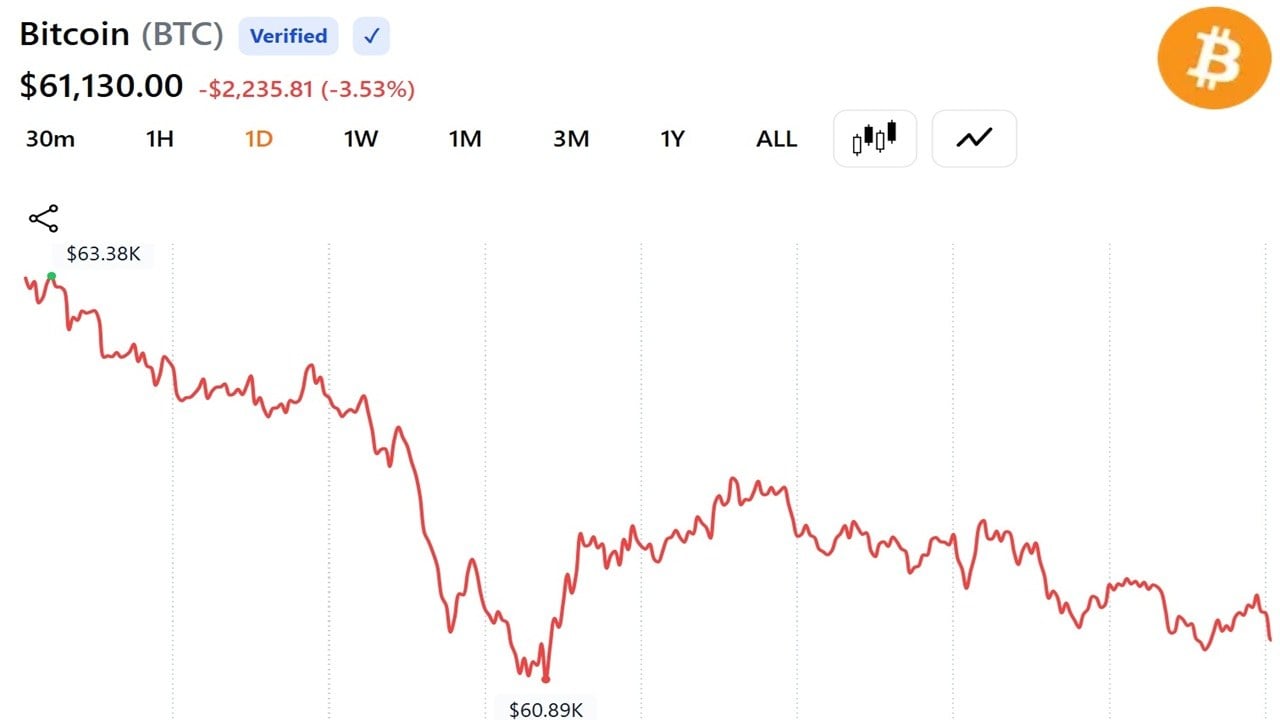
Bitcoin closed out one of its ugliest stretches in years, dropping about 17.3% while ether fell roughly 22%, the largest weekly declines for both since November 2022, when the implosion of Sam Bankman-Fried’s FTX exchange triggered a market-wide panic. Bitcoin’s slide below $60,000 capped a stretch that wiped roughly $390 billion from the total crypto market, according to data cited by Bloomberg.
The damage was amplified by leverage as nearly $7 billion in leveraged positions were liquidated during the sell-off, accelerating the move lower as forced selling cascaded through derivatives markets. In a note issued by Bloomberg, analysts warned the pain may not be over, adding:
“The forces currently at play seem almost benign by comparison, but that’s raising red flags for analysts, who warn that the token’s modest rebound may prove short-lived.”
Several pressures converged at once, with the heaviest one being relentless outflows from spot exchange-traded funds (ETFs). To this point, investors pulled roughly $5.5 billion from U.S.-listed spot bitcoin ETFs over 13 consecutive days of net redemptions, draining a key source of demand that had supported prices for much of the cycle.
Moreover, earlier this week, Bitcoin.com News reported that bitcoin ETFs logged $1.72 billion in their second-largest weekly outflow since launch, with the development being partially attributed to Strategy’s bitcoin sale, which dented confidence among institutional buyers who had absorbed supply through 2026.
Macro forces added to the mix as strong U.S. jobs data and an unresolved U.S.-Iran conflict pushed traders to abandon bets on Federal Reserve rate cuts and even price in the chance of increases. At the same time, capital also rotated into artificial intelligence (AI) equities and data-center plays, suggesting that investors are seeing clearer near-term catalysts there rather than in crypto.
Is the Bottom in?
The speed of the decline has split analysts as some argue the worst may be over, pointing to washed-out leverage and the kind of capitulation that often marks local bottoms, while others see structural frailties (thin liquidity, ETF redemptions, and competition for risk capital) exposing bitcoin to further downside before any durable recovery.
And, with more than half of all bitcoin now held at a loss, the market sits in territory that has historically preceded bottoms, yet some metrics suggest the selling has not reached levels of maximum capitulation seen in past cycles. All eyes are now on BTC and whether it can stay above the $60,000 range for an extended period of time.


