


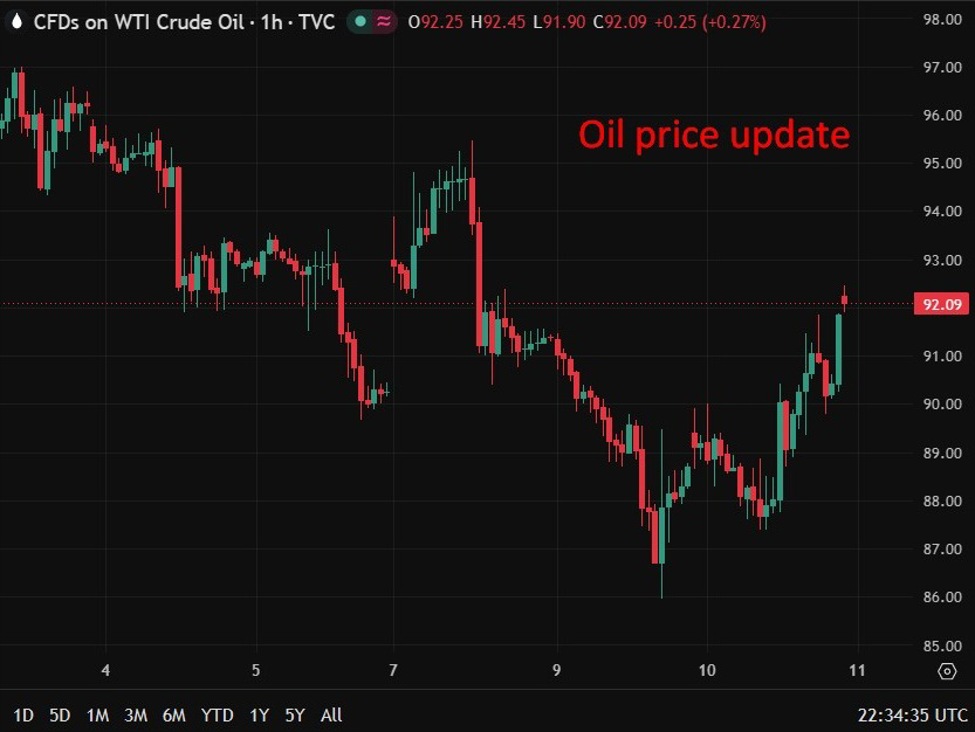

The Strait of Hormuz disruption from the escalating US-Iran conflict is already redirecting global crude flows, with Asian buyers turning to alternative supply sources including Canadian heavy crude via Trans Mountain. Full apportionment on the pipeline signals tightening physical markets for non-Hormuz barrels, which should support Canadian heavy crude differentials and could see further narrowing versus benchmark grades. With Iranian and broader Gulf supply at risk, any sustained increase in Asian demand for Pacific-loaded Canadian crude adds a structural bid to the market, even as planned capacity additions remain years away. Traders will watch whether this shift proves durable or unwinds quickly if Hormuz tensions ease.
—
Trans Mountain pipeline hits full capacity for first time since 2024 expansion as Hormuz disruption lifts Asian demand for Canadian crude.
Info via Reuters reporting.
Summary:
- Trans Mountain is running at full capacity for the first time since its expansion was completed two years ago, with the 890,000 bpd pipeline at apportionment for June, according to Trans Mountain executive Jason Balasch
- Balasch said global turmoil and the Strait of Hormuz disruption have increased demand for Canadian oil from Asian markets but make future utilisation hard to predict
- The system was only about 84% full as recently as last summer
- Canadian crude output is growing, with 2026 production expected to exceed last year’s record of 5.3 million bpd
- Trans Mountain is planning optimisation projects, including drag reducing agents and new pumping stations, expected to add 300,000 bpd of capacity by the end of 2028
- Alberta has also explored a potential 1 million bpd pipeline to British Columbia’s northwest coast, though no private company has committed to it
Canada’s Trans Mountain pipeline is running at full capacity for the first time since the completion of its major expansion two years ago, as the escalating US-Iran conflict and disruption to the Strait of Hormuz redirect global oil demand toward alternative supply sources.
The 890,000 barrel per day pipeline, which carries Alberta crude to British Columbia’s west coast, is at apportionment for June, meaning shipper demand for spot capacity exceeds availability. Trans Mountain vice president of business development Jason Balasch said ongoing global turmoil, including the Hormuz disruption, has lifted demand for Canadian oil from Asian buyers, but has also made it difficult to forecast utilisation rates beyond the near term.
The pipeline was running at only about 84% of capacity as recently as last summer, underscoring how quickly the picture has shifted as Gulf supply risk has intensified. Canadian crude production continues to grow, with the world’s fourth largest producer expected to exceed last year’s record output of 5.3 million barrels per day in 2026.
Trans Mountain is pursuing optimisation projects, including drag reducing agents and additional pumping stations, expected to add 300,000 bpd of capacity by the end of 2028. Alberta has also explored a potential 1 million bpd pipeline to the northwest coast, though no developer has yet committed.
Canadian heavy crude prices have strengthened sharply since the pipeline’s expansion tripled its capacity in 2024, and the current geopolitical backdrop appears to be reinforcing that trend.


