


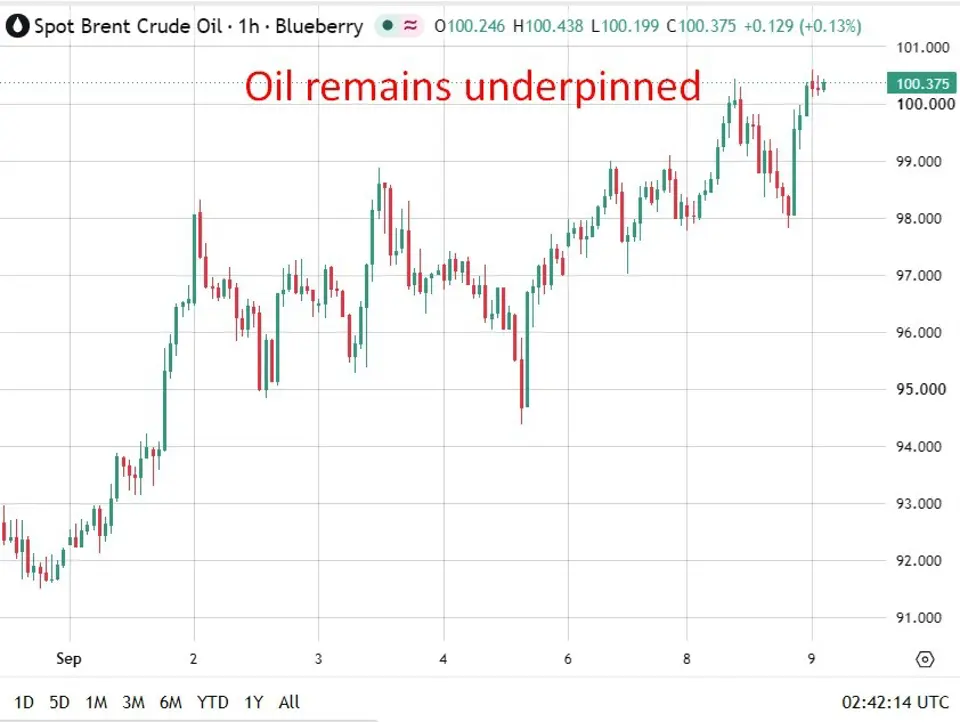

If confirmed, (direct hits on US Navy Destroyers is a big if) direct strikes on US Navy destroyers combined with claimed attacks on eighteen commercial and oil vessels attempting to transit the Strait of Hormuz would represent a serious escalation for shipping and insurance risk through one of the world’s most critical oil chokepoints. Brent, priced off seaborne crude that has to physically pass through such corridors, would be expected to react faster and more directly than WTI to any credible disruption of Hormuz transit. Gold’s reaction is the more interesting open question given the pattern seen through the past week, where the metal largely deferred to rate expectations rather than rallying on safe-haven demand; a strike directly on US naval assets is a plausible candidate to break that pattern if it does. Equity futures and the dollar are also likely to see early volatility pending any US confirmation or response.
—
Earlier:
—
Iran claims a wide-ranging wave of strikes on US naval assets and vessels crossing the Strait of Hormuz, in claims that remain unconfirmed by the United States.
Summary:
- Iran’s Revolutionary Guard said its Aerospace Force launched ballistic missiles early on September 9 at two US Navy destroyers, the USS Delbert D. Black and USS John Paul Jones
- Both vessels are equipped with cruise missiles and Aegis defense systems; the Guard claimed the strikes caused severe damage, a claim not yet confirmed by the US
- The Guard separately said it attacked eight oil vessels and ten other vessels it described as violating the prohibited and unsafe area of the Strait of Hormuz
- Iran framed both sets of strikes as retaliation for US attacks and interference with Iranian tankers and vessels
- Tehran warned Washington against further miscalculation, signalling the potential for continued escalation rather than a one-off response
- The claims have not been independently verified and no US confirmation or response had been reported at the time of writing
Iran’s Revolutionary Guard said early on September 9 that its Aerospace Force had launched ballistic missiles at two US Navy destroyers, the USS Delbert D. Black and USS John Paul Jones, both equipped with cruise missiles and Aegis defense systems. The Guard claimed the strikes inflicted heavy damage and described the action as payback for US attacks and interference with Iranian tankers and vessels, while warning Washington against further miscalculation.
In a separate statement, the Guard said it had attacked eight oil vessels and ten other vessels it accused of attempting to cross a prohibited and unsafe area of the Strait of Hormuz. Iran has repeatedly framed the Strait as a zone it can restrict or close in response to what it characterizes as hostile US and allied activity, and the latest claim points to an expanding pattern of strikes on shipping traffic through the corridor rather than a strike limited to military targets.
Neither claim had been independently confirmed by the United States at the time of writing, and the scale of any actual damage to the two destroyers, along with the identity and flag status of the eighteen commercial and oil vessels named in the second claim, remains unverified. The pattern fits a broader dynamic that has defined recent weeks of the conflict, where Iranian claims of strikes and retaliation have often outpaced confirmed US assessments, with the full picture typically emerging, and sometimes shifting, over the following hours.
The strikes follow a fresh round of US attacks on Iranian oil tankers near Kharg Island and Jask, and add to what has already been one of the largest exchanges of the conflict this week, including a missile barrage on US bases in Jordan. Markets have shown a mixed reaction to escalation over recent sessions, with oil and bond yields typically moving faster and more decisively than gold, which has largely deferred to Federal Reserve rate expectations rather than trading on safe-haven demand. A confirmed direct strike on US naval vessels, if verified, would represent a more serious category of escalation than the tanker and base strikes seen earlier in the week, and is likely to be the next test of whether that pattern in gold, and in broader risk sentiment, continues to hold.


