


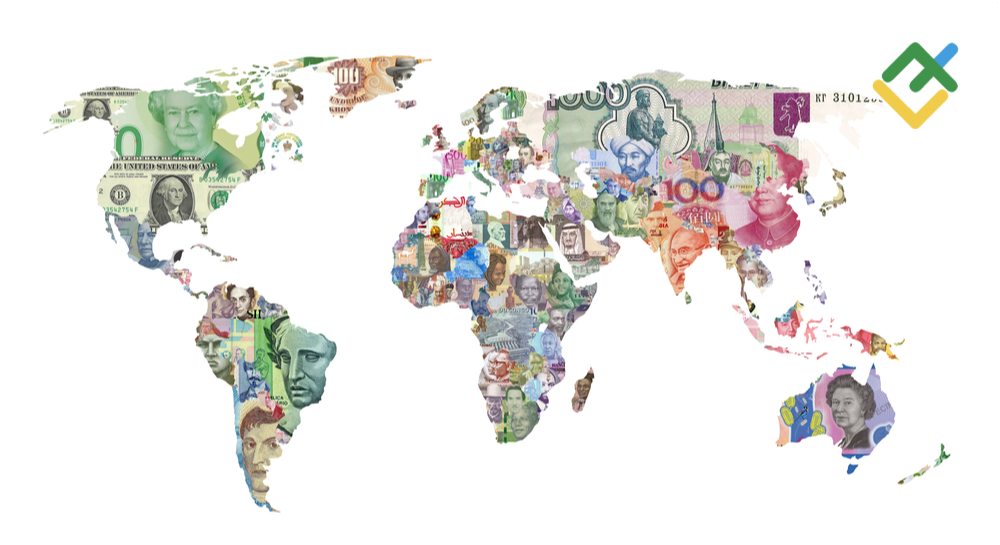


The Kuwaiti dinar (KWD) is the strongest and most valuable currency in the world in 2026: one dinar buys about $3.24. The US dollar is tenth by value per unit. Nine currencies cost more than a dollar, and four of them come from the Middle East.
This world currency ranking compares currencies by one measure, the price of one unit in US dollars. Rates for the pound, the euro and the Swiss franc on this page update live. The other currencies are pegged, so their value barely changes from year to year.
The article covers the following subjects:
Key takeaways
- The Kuwaiti dinar is the highest-valued currency in the world, at about $3.24 per dinar.
- The Bahraini dinar ($2.66) and the Omani rial ($2.60) hold second and third place. Both are fixed to the US dollar.
- The British pound is the most expensive of the major floating currencies: 1 GBP = $1.31136.
- The US dollar ranks tenth by unit value, yet it is on one side of 89.2% of all foreign exchange trades (BIS Triennial Survey).
- The price of one unit depends on how a currency was denominated and whether it is pegged. It says little about the size of the economy behind it.
Highest currency in the world: top 10 ranking for 2026
The table lists the ten currencies with the highest value per unit. For each one it shows the price in US dollars and how the exchange rate is set.
|
Rank |
Currency |
Code |
Value in US dollars |
How the rate is set |
|
1 |
Kuwaiti dinar |
KWD |
about $3.24 |
Pegged to a basket of currencies, composition not published |
|
2 |
Bahraini dinar |
BHD |
$2.66 |
Fixed: 0.376 dinar per US dollar |
|
3 |
Omani rial |
OMR |
$2.60 |
Fixed since 1986: 0.3845 rial per US dollar |
|
4 |
Jordanian dinar |
JOD |
$1.41 |
Pegged to the US dollar since 1995: 0.709 dinar per dollar |
|
5 |
British pound |
GBP |
$1.31136 |
Floating |
|
6 |
Gibraltar pound |
GIP |
equal to 1 GBP |
Pegged to the British pound at par |
|
7 |
Cayman Islands dollar |
KYD |
$1.20 |
Fixed to the US dollar since 1974 |
|
8 |
Swiss franc |
CHF |
1 USD = CHF0.83144, about $1.19 per franc |
Floating |
|
9 |
Euro |
EUR |
$1.09721 |
Floating |
|
10 |
US dollar |
USD |
$1.00 |
Floating |
The pound, euro and franc rates come from live LiteFinance quotes. The other currencies have a fixed rate or move within a narrow range.
Places 7 and 8 are close. The Cayman Islands dollar is fixed at $1.20 and the franc trades near $1.19, so the two swap places whenever USD/CHF falls below 0.8333.
A high exchange rate is not the same as purchasing power: what a currency buys at home depends on local prices. The pegs also tie monetary policy in the Gulf to the United States. When the Federal Reserve changes interest rates, Gulf central banks with a dollar peg usually follow.
1. Kuwaiti dinar (KWD)
The Kuwaiti dinar has been the most expensive currency in the world for years. Kuwait is the only Gulf oil exporter that does not fix its currency to the US dollar alone. The Central Bank of Kuwait pegged the dinar to the dollar from January 2003 to May 2007 and then returned to a weighted basket of currencies. The bank does not publish the composition of the basket.
That is why the dinar moves a little against the dollar every day while the currencies of its neighbours stay flat. The central bank’s official rate stays close to 0.309 dinar per US dollar, or about $3.24 per dinar. Large oil reserves and export revenue give the central bank the reserves it needs to hold the rate.
2. Bahraini dinar (BHD)
Bahrain fixes its dinar at 0.376 per US dollar, which makes one dinar worth $2.66. Because the rate is fixed, the Bahraini dinar gains and loses against the euro, the pound and every other currency exactly as the dollar does.
3. Omani rial (OMR)
The Omani rial has been fixed at $2.6008 since 1986, so one dollar buys about 0.3845 rial. Oman is an oil and gas exporter, and export revenue backs the peg.
4. Jordanian dinar (JOD)
Jordan has pegged its dinar to the US dollar since October 1995, at 0.709 dinar per dollar, or $1.41 per dinar. Unlike the three currencies above it, the Jordanian dinar is not backed by large oil exports. It is expensive because of the level at which the peg was set.
5. British pound (GBP)
The pound sterling is the highest-valued major currency and the fourth most traded in the world, with a 10.2% share of global turnover (BIS Triennial Survey). Its rate floats freely: 1 GBP = $1.31136.
6. Gibraltar pound (GIP)
The Gibraltar pound is pegged to the British pound at par, so its dollar value copies GBP/USD. Some rankings leave it out because it is a local version of sterling. By unit value it stands right behind the pound.
7. Cayman Islands dollar (KYD)
The Cayman Islands dollar has been fixed at $1.20 since 1 April 1974. The territory is an offshore financial centre, and the fixed rate is part of what it offers to international business.
8. Swiss franc (CHF)
The franc is quoted as USD/CHF, the number of francs per dollar: 1 USD = CHF0.83144. A reading below 1 means one franc costs more than one dollar.
The franc is the sixth most traded currency in the world with a 6.4% share, up from eighth place in the previous BIS survey. Traders often buy it when stock markets fall, which is why it is called a safe-haven currency.
9. Euro (EUR)
The euro is the second most traded currency in the world, with a 28.9% share of turnover (BIS Triennial Survey). It is used by 21 European Union countries, and Bulgaria was the latest to join. One euro costs $1.09721.
10. US dollar (USD)
The US dollar is the benchmark for this ranking and for the whole currency market. It is the world’s main reserve currency and is on one side of 89.2% of all foreign exchange trades, and EUR/USD is the most traded pair with 21.2% of turnover (BIS Triennial Survey). By price per unit it is only tenth.
Where does the US dollar rank among world currencies?
By the value of one unit, the US dollar ranks tenth. Nine currencies are worth more than USD: the Kuwaiti dinar, the Bahraini dinar, the Omani rial, the Jordanian dinar, the British pound, the Gibraltar pound, the Cayman Islands dollar, the Swiss franc and the euro. By trading volume the dollar is first by a wide margin.
Where does the Canadian dollar rank?
The Canadian dollar is worth less than the US dollar: 1 USD = C$1.42152, or about 70 US cents per Canadian dollar. Among widely traded currencies below the US dollar, the Singapore dollar costs more (1 USD = N/A), and the Brunei dollar is pegged to it at par. The Australian dollar follows: 1 AUD = $0.66293.
Strongest, most traded, most stable: three different rankings
The word “strongest” usually means the highest price per unit, and by that measure the Kuwaiti dinar wins. Two other rankings give different answers.
- Most traded. The US dollar, the euro, the Japanese yen, the British pound, the Chinese yuan and the Swiss franc, in that order (BIS Triennial Survey).
- Most stable. Against the dollar, the steadiest currencies are the pegged ones: the Bahraini dinar, the Omani rial, the Jordanian dinar and the Cayman Islands dollar. Among floating currencies, the Swiss franc has the safe-haven reputation.
The other end of the scale has its own ranking: see the weakest currencies in the world.
Can you trade the strongest currencies?
The four Middle Eastern currencies at the top are pegged, so their rates hardly move and there is little to trade. The floating currencies in the ranking are a different case. GBP/USD, EUR/USD, USD/CHF and USD/CAD are among the most liquid pairs on the market, and all four are available at LiteFinance.
A trader earns on the change in the rate, and the unit price of a currency plays no part in it. The same change can bring a loss, so the risk has to be limited in every trade.
Those who are new to trading can copy the trades of experienced traders.
TrustTrade
Profitability
40514.71%
vahidpr
Profitability
14971.48%
investormaster
Profitability
8793.09%
aliardo12
Profitability
7163.68%
AlphaTrader2020
Profitability
6109.86%
Make profits from the first day of trading without training. The best traders from the whole world gathered on the same platform to share their money-making strategies.
Strongest currencies in the world: FAQ
The content of this article reflects the author’s opinion and does not necessarily reflect the official position of LiteFinance broker. The material published on this page is provided for informational purposes only and should not be considered as the provision of investment advice for the purposes of Directive 2014/65/EU.
According to copyright law, this article is considered intellectual property, which includes a prohibition on copying and distributing it without consent.


