


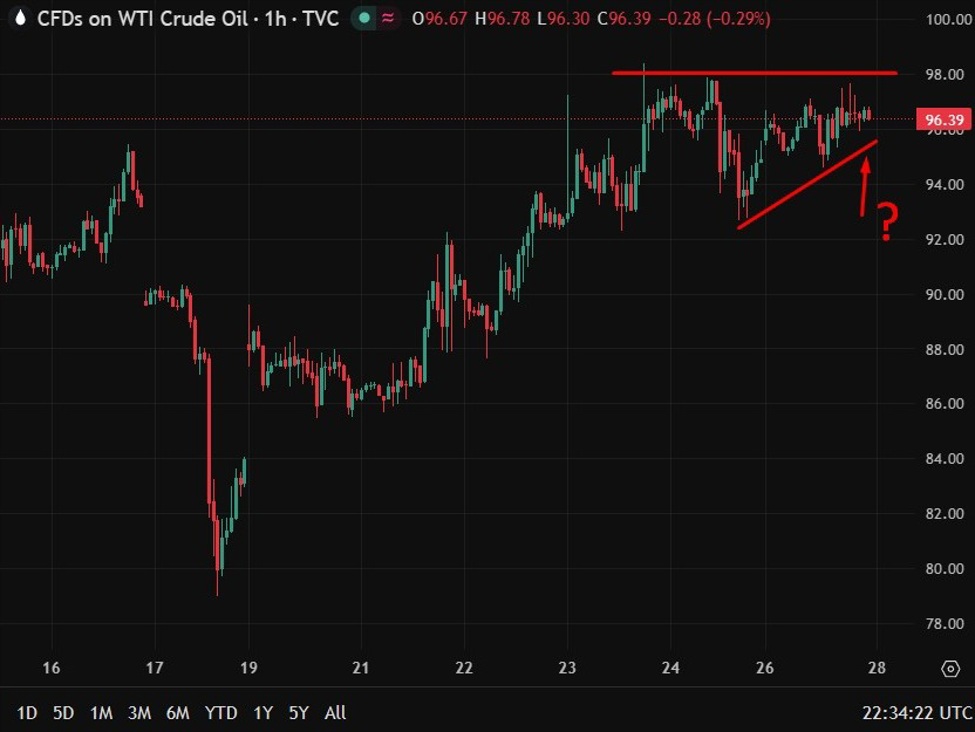

Trump and his national security team are sceptical of Iran’s Hormuz offer, with officials saying he doubts Tehran’s good faith and will not drop his demand for an end to nuclear enrichment. (via WSJ, gated).
Not so upbeat as this reported earlier by CNN:
U.S. and Iran closer to deal than it seems as mediators push for Hormuz agreement first
Summary
- Trump and his national security team are sceptical of Iran’s offer to open the Strait of Hormuz while deferring nuclear discussions, according to U.S. officials
- Trump discussed the proposal with aides on Monday morning, stopping short of an outright rejection but raising concerns that Iran is not negotiating in good faith
- His core demand that Iran end nuclear enrichment entirely and commit never to building a nuclear weapon remains the central sticking point
- The White House is expected to offer its response and counterproposals to Iran in the coming days
- Trump has threatened to resume bombing Iran if he concludes talks are going nowhere, though there is growing sentiment within the administration that he wants to avoid restarting hostilities
- The White House declined to confirm or deny the specifics, saying anything not announced by Trump or the White House directly should be treated as speculation
- Source: Wall Street Journal
President Donald Trump and his national security team have expressed scepticism over Iran’s proposal to reopen the Strait of Hormuz as a first step toward ending the war, with U.S. officials warning that Tehran has yet to demonstrate the good faith required to advance talks and has shown no willingness to meet Washington’s central condition.
Trump convened discussions with senior aides on Monday morning to consider the Iranian offer, which envisages Hormuz access being restored while nuclear negotiations are set aside for a later stage. He did not reject the proposal outright, but officials familiar with the conversation said he raised serious doubts about whether Iran was genuinely prepared to deal, and made clear that his core demand remains intact: Tehran must end its nuclear enrichment programme entirely and commit to never developing a nuclear weapon.
That demand has been Iran’s firmest red line throughout the conflict. The Islamic Republic has consistently refused to countenance abandoning enrichment, framing it as a sovereign right. The distance between that position and Trump’s stated requirement leaves the two sides facing a fundamental incompatibility that a Hormuz-first framework does not resolve, merely defers.
The White House is expected to deliver a formal response and counterproposals to Tehran in the coming days, keeping the negotiating track alive for now. That continuity reflects what officials describe as a growing sentiment within the administration that Trump would prefer to avoid resuming military strikes if a workable path to an agreement can be found. The threat, however, has not been withdrawn. Trump has explicitly warned that he will order bombing to resume if he concludes that talks are proving fruitless, a lever he has shown no reluctance to invoke throughout the conflict.
The divergence between this account and the more optimistic picture painted by sources close to the mediation process earlier this week is striking. Where those sources described the two sides as closer than they appeared and mediators as making genuine progress, the Wall Street Journal’s account from inside the administration suggests Washington views the Iranian offer with suspicion and has yet to be persuaded that Tehran is negotiating seriously.
The White House did not engage with the substance of the report directly. Spokeswoman Anna Kelly said the United States would not negotiate through the press, and that anything not formally announced by Trump or the White House should be considered speculation. The counterproposal expected in the coming days will be the clearest signal yet of whether a deal retains any real prospect of being struck.
Tweets count as “formally announced by Trump”.
—–
Bearish for any near-term resolution of the Hormuz disruption and supportive of elevated crude prices. Trump’s scepticism over Iranian good faith, combined with his non-negotiable demand that Tehran end enrichment entirely, suggests the gap between the two sides is wider than the CNN-sourced optimism earlier implied. The acknowledgement of a growing administration sentiment against restarting hostilities offers a modest floor, but the explicit threat to resume bombing if talks prove fruitless keeps the upside risk to oil prices firmly in place. Markets will now focus on the White House counterproposal expected in the coming days as the next signal of whether a staged Hormuz-first framework can survive Washington’s conditions.


