



Exxon Mobil is in talks to return to Venezuelan oil production nearly two decades after being pushed out, with a deal potentially covering six fields and coming together within weks.
Summary:
Source: The New York Times (gated), citing anonymous sources
- Exxon is pursuing negotiations that could restore its oil production presence in Venezuela, roughly two decades after being forced out
- A potential agreement, said to be weeks away, could cover contracts across as many as six Venezuelan oil fields in multiple parts of the country
- Exxon described Venezuela as uninvestable as recently as January; the company declined to comment on the report
- Venezuela’s government and state oil company did not respond to requests for comment
- A completed deal would represent a significant political win for President Trump, who has opened Venezuelan energy resources to US corporate interests
- Trump orchestrated Maduro’s removal and subsequently placed the former Venezuelan vice president in charge of the country’s commercial ties with the US
- Completing the agreement would also resolve a long-running legal dispute that had cast Exxon as a central adversary of Venezuela’s Socialist government
Exxon Mobil is in advanced talks to return to oil production in Venezuela, nearly two decades after being pushed out of the country, in a development that would mark one of the more remarkable corporate reversals in the energy sector in recent memory.
The negotiations, reported by the New York Times and based on people familiar with the matter who spoke on condition of anonymity, could produce an agreement within weeks. The potential deal is said to cover contracts for as many as six Venezuelan oil fields spread across multiple regions of the country, a scope that would give Exxon a substantial footprint in one of the most reserve-rich nations on earth.
The turnaround is striking in its speed as much as its scale. As recently as January, Exxon had characterised Venezuela as uninvestable, a blunt assessment that reflected years of legal conflict and political hostility between the company and Caracas. An Exxon spokesman declined to comment on the Times report. Venezuela’s government and its state oil company did not respond to requests for comment.
For President Donald Trump, a completed agreement would represent a considerable political achievement. His administration has worked to open Venezuelan energy resources to US corporate interests, and the Exxon talks are a direct product of that policy environment. Trump also played a central role in orchestrating the removal of Nicolas Maduro from power, subsequently installing the former Venezuelan vice president to manage the country’s commercial relationships with the United States.
Beyond the politics, the deal would bring to a close a protracted legal battle that had positioned Exxon as one of the most prominent corporate adversaries of Venezuela’s Socialist government, a conflict that stretched across multiple administrations and arbitration proceedings.
Venezuela’s petroleum reserves are among the largest in the world, and the return of a major US operator would signal a new chapter in the country’s attempt to rehabilitate its energy sector after years of underinvestment and production decline.
—
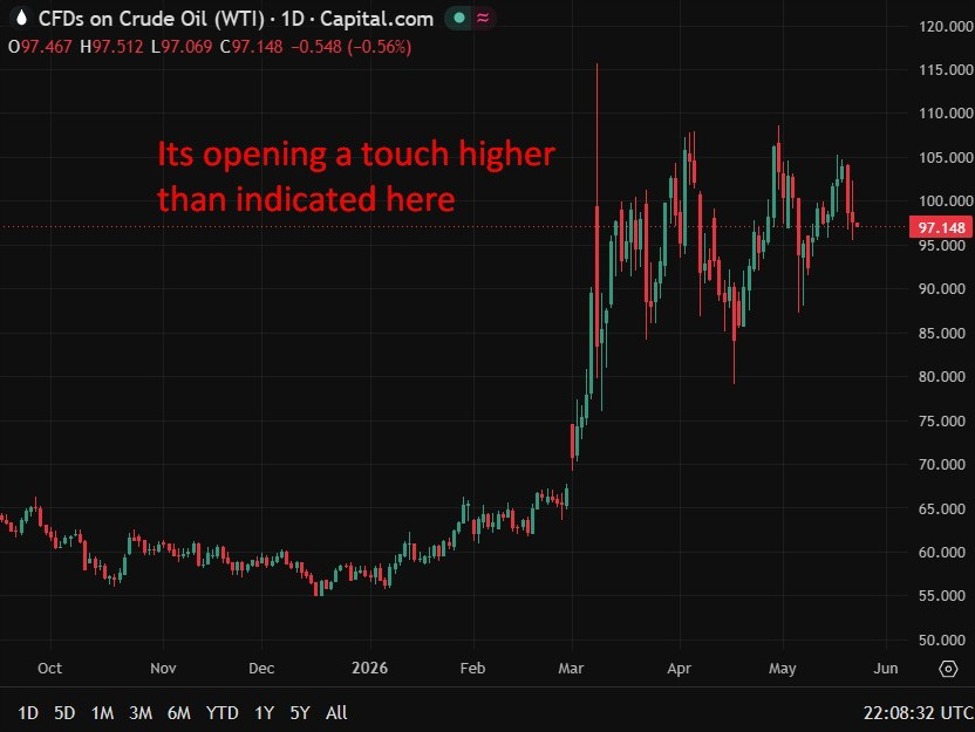
A confirmed Exxon return to Venezuelan production would represent a meaningful shift in supply dynamics, given that Venezuela holds some of the largest petroleum reserves on the planet. The prospect of renewed US corporate involvement in Venezuelan oil, potentially covering six fields across multiple regions, could weigh on prices if markets begin pricing in a material increase in output over the medium term.
The political dimension adds complexity: the deal’s fate remains tied to the broader trajectory of US-Venezuela relations and the stability of the post-Maduro commercial framework Trump has helped construct.


