


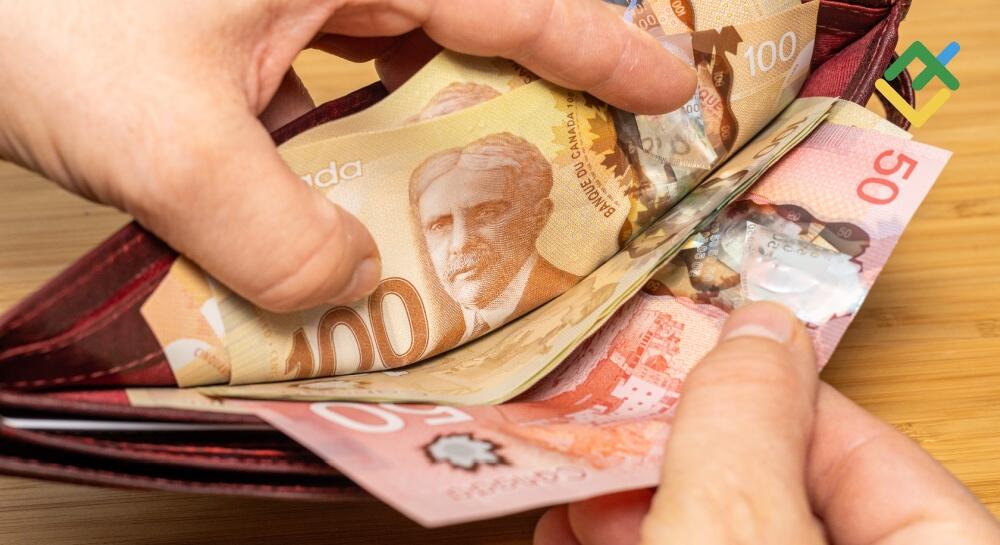


The wide interest rate differential between the Federal Reserve and the Bank of Canada, combined with oil’s muted response to the escalating geopolitical tensions in the Middle East, has boosted the USD/CAD pair. Let’s examine these drivers in detail and develop a trading plan.
The article covers the following subjects:
Major Takeaways
- Oil does not help USD/CAD bears.
- The Bank of Canada may leave its rate unchanged in 2026.
- Monetary policy is favoring the greenback.
- The USD/CAD pair can be bought on a pullback from 1.3925, 1.3900, and 1.3870.
Weekly Fundamental Forecast for Canadian Dollar
At the onset of the armed conflict in the Middle East, the Canadian dollar appeared to be one of the main beneficiaries of rising geopolitical tensions. A surge in oil prices could have boosted exports from this oil-producing country and accelerated its GDP growth. In fact, the opposite occurred. The economy has been contracting for the second consecutive quarter, driving the USD/CAD pair to its highest levels since the start of the year.
Canada’s GDP
Source: Bloomberg.
However, the situation is not as bad as it might seem at first glance. Canada is far from a recession, and its labor market is beginning to stabilize. In May, the unemployment rate fell to 6.6%, and employment rose by 87,800. Nevertheless, the BoC has every reason not to rush into tightening monetary policy. None of the 27 Bloomberg experts expect an adjustment to the overnight rate at the June 10 meeting. Only two of the 15 respondents forecast a 25-basis-point increase by the end of the year.
Canadian Labor Market Indicators
Source: Bloomberg.
Analysts believe that Canada’s economic weakness will slow inflation. In April, consumer prices fell short of Bloomberg’s forecasts, and the Bank of Canada’s trimmed mean fell to its lowest level since January 2021.
Currently, the federal funds rate is 150 basis points above the Bank of Canada’s overnight rate, and the futures market is pricing in a 70% probability of a rate hike in 2026. The widening of these spreads is driving the rally in USD/CAD quotes.
Meanwhile, the oil market is adapting to the closure of the Strait of Hormuz. Brent is currently trading 30% above pre-war levels, which is leading to a decline in global demand. For instance, Chinese imports in May fell to an eight-year low of 7.8 million bpd. By comparison, the average in 2015 was around 11.5 million bpd. The US is ramping up energy exports to record levels, while Gulf countries are seeking alternative supply routes.
As a result, Brent fell rather than rose due to the escalation of the conflict in the Middle East. Investors do not rule out a US-Iran deal, the conclusion of which would open the floodgates. Oil flows through the Strait of Hormuz would catalyze a price drop and put pressure on the Canadian dollar. Coupled with wide interest rate spreads and divergence in monetary policy, this sets the stage for a continued rally in the USD/CAD pair.
Weekly USDCAD Trading Plan
Cracks in the economy may prompt the Bank of Canada to adopt less hawkish rhetoric than it did in April. With oil prices reluctant to rise and the potential for the US dollar to strengthen in response to the US inflation data, buying the USD/CAD pair on rebounds from support levels of 1.3925, 1.3900, and 1.3870 is a solid strategy.
This forecast is based on the analysis of fundamental factors, including official statements from financial institutions and regulators, various geopolitical and economic developments, and statistical data. Historical market data are also considered.
Price chart of USDCAD in real time mode
The content of this article reflects the author’s opinion and does not necessarily reflect the official position of LiteFinance broker. The material published on this page is provided for informational purposes only and should not be considered as the provision of investment advice for the purposes of Directive 2014/65/EU.
According to copyright law, this article is considered intellectual property, which includes a prohibition on copying and distributing it without consent.


