


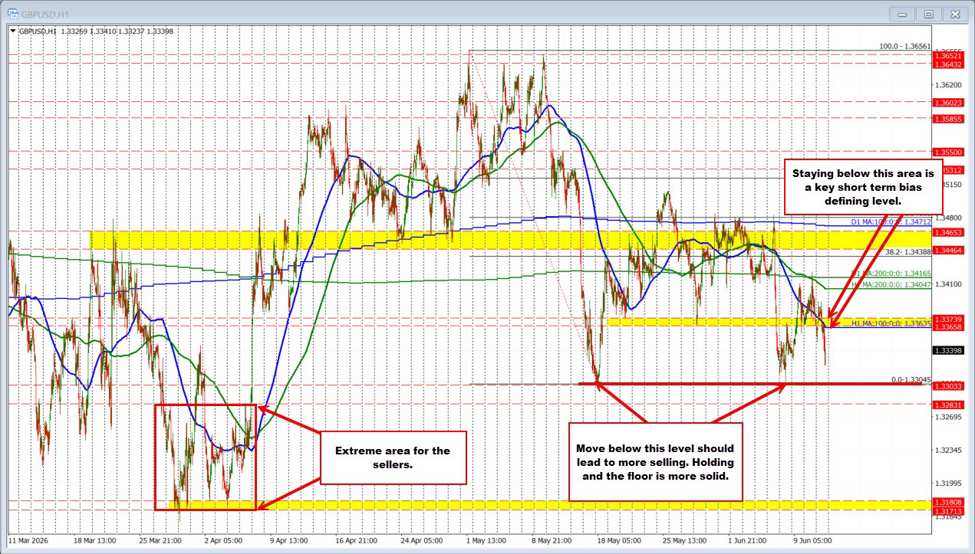

The GBPUSD spent the early part of the day trading above and below a key swing area between 1.3365 and 1.33739. However, as North American traders entered, the bias shifted lower. Sellers leaned against the top of that swing zone, pushed the pair below the 100-hour moving average at 1.33635, and accelerated the downside momentum. The move has since extended to a session low of 1.3325.
Helping fuel the decline were stronger-than-expected U.S. initial jobless claims data and a firmer PPI report. Combined with yesterday’s CPI release, the data have many analysts now projecting a 0.4% increase in core PCE inflation. That is not the type of inflation signal that supports expectations for Fed rate cuts anytime soon and has helped underpin the U.S. dollar.
From a technical perspective, the next key downside target comes near 1.33045, where both the May and June swing lows converge. A break below that level would increase the bearish bias and open the door toward support at 1.32831. Below that, traders would shift their focus to a broader support zone between 1.3171 and 1.3183.
On the topside, the former swing area between 1.3365 and 1.33739, along with the falling 100-hour moving average, now serve as important resistance. Buyers would need to reclaim those levels to weaken the bearish outlook and target the 200-hour moving average at 1.34047, followed by the 200-day moving average at 1.34165. Ultimately, a move above all of those resistance levels is needed to return control to the buyers, with each break adding another layer of bullish confidence.


