



Key Takeaways
- Robinhood Markets cut 290 jobs on June 16, taking a $28M restructuring charge in Q2 2026.
- HOOD shares gained up to 5% as investors backed CEO Vlad Tenev’s efficiency-focused move.
- Robinhood reports June record daily volumes across equities, options, and prediction markets.
A Lean Team at Peak Volume
The company filed a Form 8-K with the SEC disclosing a reduction in force affecting approximately 10% of its full-time workforce. Robinhood employed about 2,900 full-time employees as of December 31, 2025. The company will also close a small number of open roles.
CEO Vlad Tenev addressed staff directly in a note shared publicly on X. “Robinhood’s business has never been stronger,” Tenev wrote. “We cannot default to operating as a heavily-layered organization. We must be a lean, hyper-focused team.”
The SEC filing states the cuts are intended to “maintain a high performance culture, further accelerate product velocity, and remain lean and disciplined.”
What the Numbers Say
The $28 million charge breaks down as follows:
- $20 million in cash costs, primarily employee severance and benefits
- $8 million related to share-based compensation
Both items will be recognized as an accrual in Q2 2026. The company noted that if actual costs differ materially, it will file an amendment.
Record Volumes Across the Board
The timing is notable. June month-to-date average daily trading volumes have reached record levels across equities, options, and prediction markets, according to the filing.
The company has diversified its revenue base beyond its core trading business, moving into retirement accounts, wealth management, and credit cards. That shift matters because trading revenue tied to market sentiment can swing sharply quarter to quarter.
Q1 2026 saw Robinhood miss profit expectations amid crypto-driven volatility. Conditions improved in Q2 as equity markets strengthened and geopolitical tensions eased.
Market Reaction
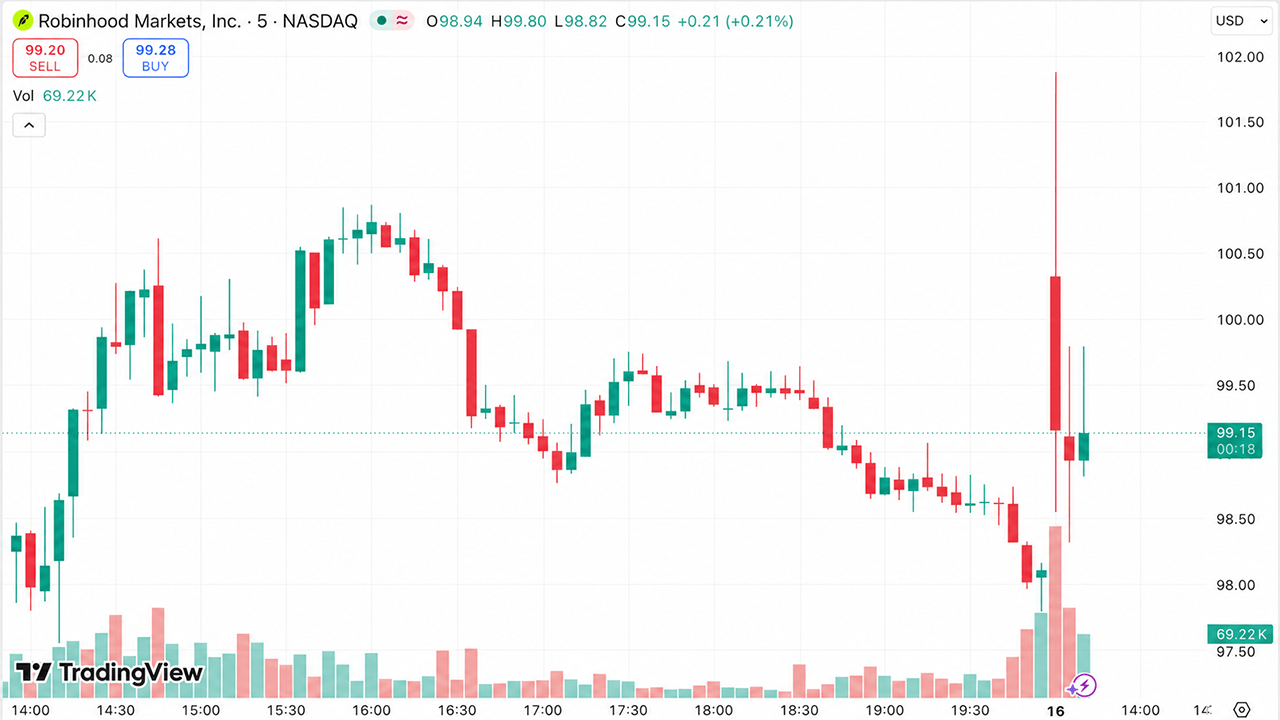
Investors responded positively. Shares of HOOD gained between 3% and 5% in premarket and early trading following the announcement. The stock had been down approximately 13% year-to-date through the prior close.
Prior Cuts for Comparison
Robinhood has moved through workforce reductions before. In 2022, the company made two rounds of cuts totaling roughly 32% of its workforce during the crypto winter and post-IPO turbulence. A smaller 7% reduction followed in 2023.
The current 10% reduction is more contained and is being positioned as an optimization step during a period of growth, not a defensive reaction to falling business.
What It Means for Traders and the Industry
Robinhood’s prediction market volumes hitting records is a direct signal that retail engagement on the platform is high. A leaner org structure focused on product velocity means the company intends to ship features faster, which could benefit active users across equities, options, and event contracts. The $28 million charge is manageable relative to the company’s current trajectory, and investors are treating the move as a sign of discipline rather than distress.
For the broader industry, the timing carries weight. Crypto markets have been under sustained pressure, with retail trading appetite cooling across most centralized platforms. Robinhood’s ability to post record volumes in that environment points to a shift in where retail activity is concentrating, with prediction markets and equities absorbing demand that crypto volatility once captured.
Exchanges and brokerages leaning heavily on crypto-only revenue are navigating a thinner margin period, and Robinhood’s diversified model gives it footing that pure-play crypto platforms currently lack.


