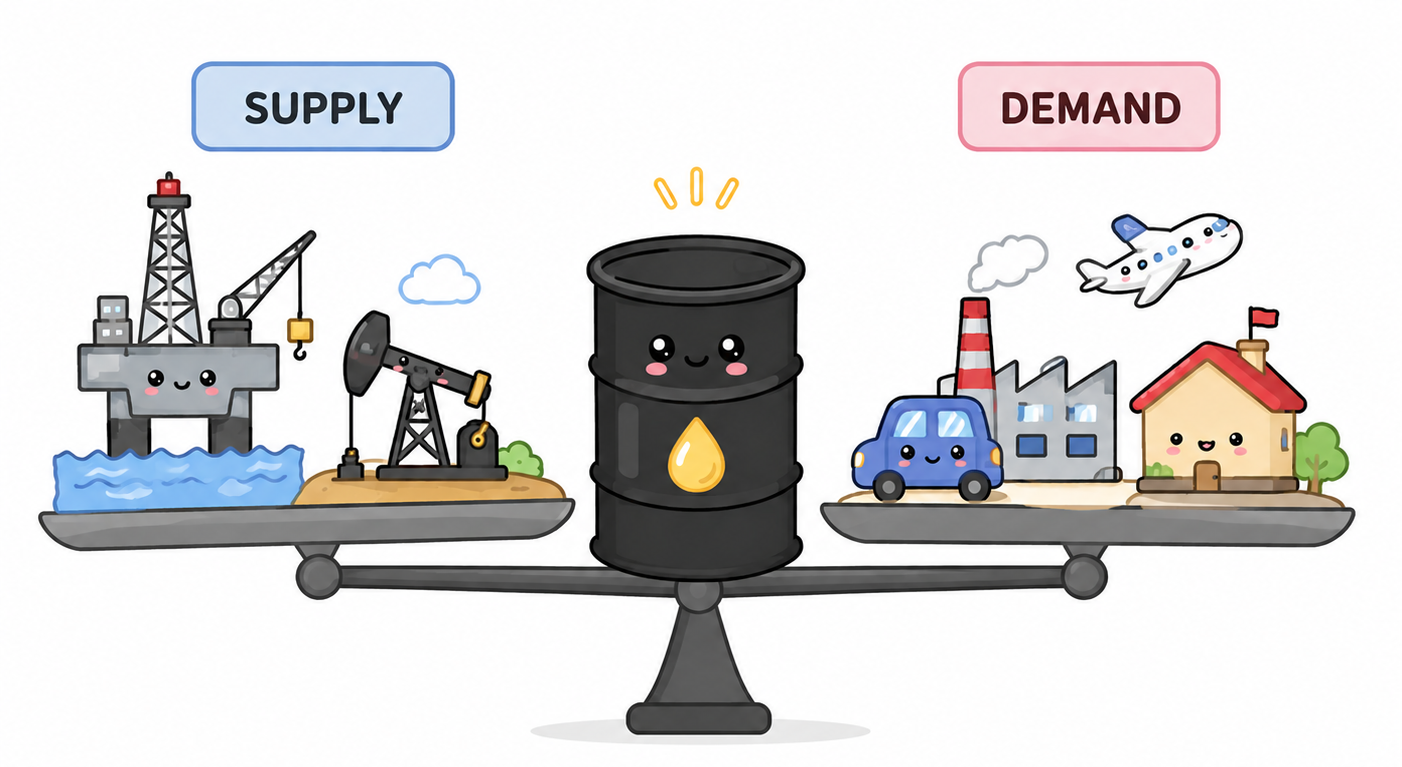



Tanker attacks near a key shipping route and a fresh OPEC+ supply increase are pulling oil prices in opposite directions this week.
How can markets make sense of these conflicting signals, and what kind of headlines should traders be watching out for?
What Actually Happened?
Over the weekend, the OPEC+ approved another production increase of 188,000 barrels per day for August. Saudi and UAE exports climbed back near pre-conflict levels. Tanker traffic through the Strait of Hormuz, which was significantly disrupted earlier this year during the broader Iran-Israel-U.S. conflict, showed real signs of normalizing.
A few days later, Iranian forces reportedly struck a Qatari liquefied natural gas tanker and fired on other commercial vessels near the strait. The U.S. Treasury responded by revoking a government waiver that had let Iran legally sell oil despite sanctions.
WTI crude, which had been drifting near four-month lows around $68 a barrel, jumped back above $71. Brent crude pushed past $74.
What Do These Mean for Crude Oil?
Let’s start with the supply side, because it’s the quieter of the two stories. Saudi Aramco cut its official selling price for Asian buyers by $11 a barrel this week, widening the discount against the regional benchmark to $1.50.
That’s a pretty huge deal because the last two times Aramco cut prices this aggressively were during the 2015 and 2020 oil price wars – periods defined by a glut, not a shortage.
An oil producer doesn’t slash prices like that unless it expects the market to be swimming in crude. Combine that with the OPEC+ output hike and recovering exports from the Gulf, and the fundamental case for lower oil looks fairly solid.
Now the demand side. The Strait of Hormuz sits inside a conflict zone that isn’t fully resolved. Sea mines were reportedly laid there earlier this year, and a fragile U.S.-Iran agreement has been holding an uneasy peace since June.
Tuesday’s attacks tested that peace directly. When a tanker gets hit and a government sanction gets tightened on the same day, traders don’t just price in the damage that already happened. They price in the risk of what might happen next.
Markets call this a risk premium, which is an extra cost baked into a price because of danger and uncertainty, separate from the actual barrels being bought and sold.
Here’s why both stories can be right at once: supply and demand set where oil “should” trade if nothing scary is happening, while geopolitical risk sets how much extra buyers are willing to pay just in case something scary does happen.
This week’s geopolitical flare-up likely pushed the risk premium up sharply, even while the underlying supply picture stayed loose. Neither side of that trade canceled the other out. They just fought for control of the price, and for now, the fear side won the day.
Promoted: Scale Your Data Driven Trading Strategy
With geopolitical headlines putting crude oil and inflation back in focus, traders now have to react to major developments and price shifts as they come. That means your strategy needs more than a good macro read. It needs discipline, risk control, and room to grow when the setup actually plays out.The5ers has spent the last 10 years building a funding model designed for serious traders, which is why over 1.6 million traders worldwide trust them to provide capital and scaling opportunities. Learn more about The5ers Disclosure: We may earn a commission from our partners if you sign up through our links, at no extra cost to you.
What Does This Mean for Traders?
Oil rallied several percentage points within hours of Tuesday’s attacks, not because global oil consumption changed, but because expectations about future oil supply shifted. That’s how risk premiums work. They can appear or vanish based on a single headline, long before any actual barrels stop flowing.
The ripple effects spread beyond oil itself. The 10-year Treasury yield rose toward 4.50% as the spike revived worries that energy costs could push inflation higher again. The U.S. Dollar Index firmed to around 101.10.
Gold, often treated as a safe haven during geopolitical stress, actually slipped roughly 1.3%, a reminder that “safe haven” behavior isn’t automatic. It depends on what else is competing for attention that day, in this case a stronger dollar and rising yields pulling in the opposite direction.
Oil-linked currencies also tend to move with crude. The Canadian dollar, backed by Canada’s status as a major oil exporter, was one of the few currencies to hold its ground against the broader dollar strength this week.
In the short term, headlines out of the strait can swing oil by several dollars in a single session. In the longer term, the supply-side fundamentals, OPEC+ output, Gulf export volumes, tanker traffic, tend to reassert themselves once the immediate scare fades. Which force wins in the coming days remains genuinely uncertain, and multiple factors beyond this single story will likely keep shaping the outcome.
The Bottom Line
- Two conflicting market narratives can both be true simultaneously. Supply data pointed toward lower oil prices this week while geopolitical risk pointed toward higher prices, at the same time.
- Aggressive official price cuts from major producers, like Saudi Aramco’s this week, can signal how those producers privately view supply and demand, sometimes more clearly than public statements do.
- Risk premiums can appear or disappear within hours. The size and speed of Tuesday’s move reflects fear repricing, not a change in actual oil supply.
- Safe-haven assets don’t always behave predictably. Gold fell even as geopolitical risk rose, because other forces, a stronger dollar and higher yields, pulled harder in the moment.
- Cross-asset connections matter. Oil, yields, the dollar, and commodity-linked currencies like the Canadian dollar often move together around events like this one.
What to Watch Next
The U.S. Federal Reserve releases minutes from its June meeting later today (Wednesday, July 8, 18:00 GMT), and Tuesday’s oil spike could sharpen the inflation debate inside those minutes.
Weekly U.S. EIA crude inventory data and any further developments around tanker traffic in the strait are also worth watching, since either could confirm or unwind this week’s risk premium.
This week’s tanker attacks near the Strait of Hormuz sent oil higher even as supply data pointed the other way, and if you’re not familiar with how a “risk premium” actually gets priced in, this piece can help. Premium members can read our lesson:
📖 Geopolitical Risk, Trade Policy, and Safe Haven Flows
Reading this helps you understand why geopolitical shocks move prices independently of supply and demand, why gold doesn’t always behave like a safe haven when the dollar and yields are pulling in the opposite direction, and which currencies tend to catch a bid when the world starts breaking things.
And if you’re not a Premium subscriber yet, now’s a good time to sign up.
With Babypips Premium, you get full access to School of Pipsology lessons that help you understand not just why oil jumped on a single headline, but how geopolitical risk, safe haven flows, and currency reactions all connect the moment a conflict zone flares up.