


US Treasury yields rose on Monday as traders braced for the release of US inflation figures this week, following a worse-than-expected Nonfarm Payrolls report last Friday. Headlines that read “Iran rules out talks with Trump, says will wait until his term ends in 2029,” poured cold water on negotiations for a swift reopening of the Strait of Hormuz.
US yields rise as Hormuz deal hopes fade, Oil surges and traders brace for inflation data
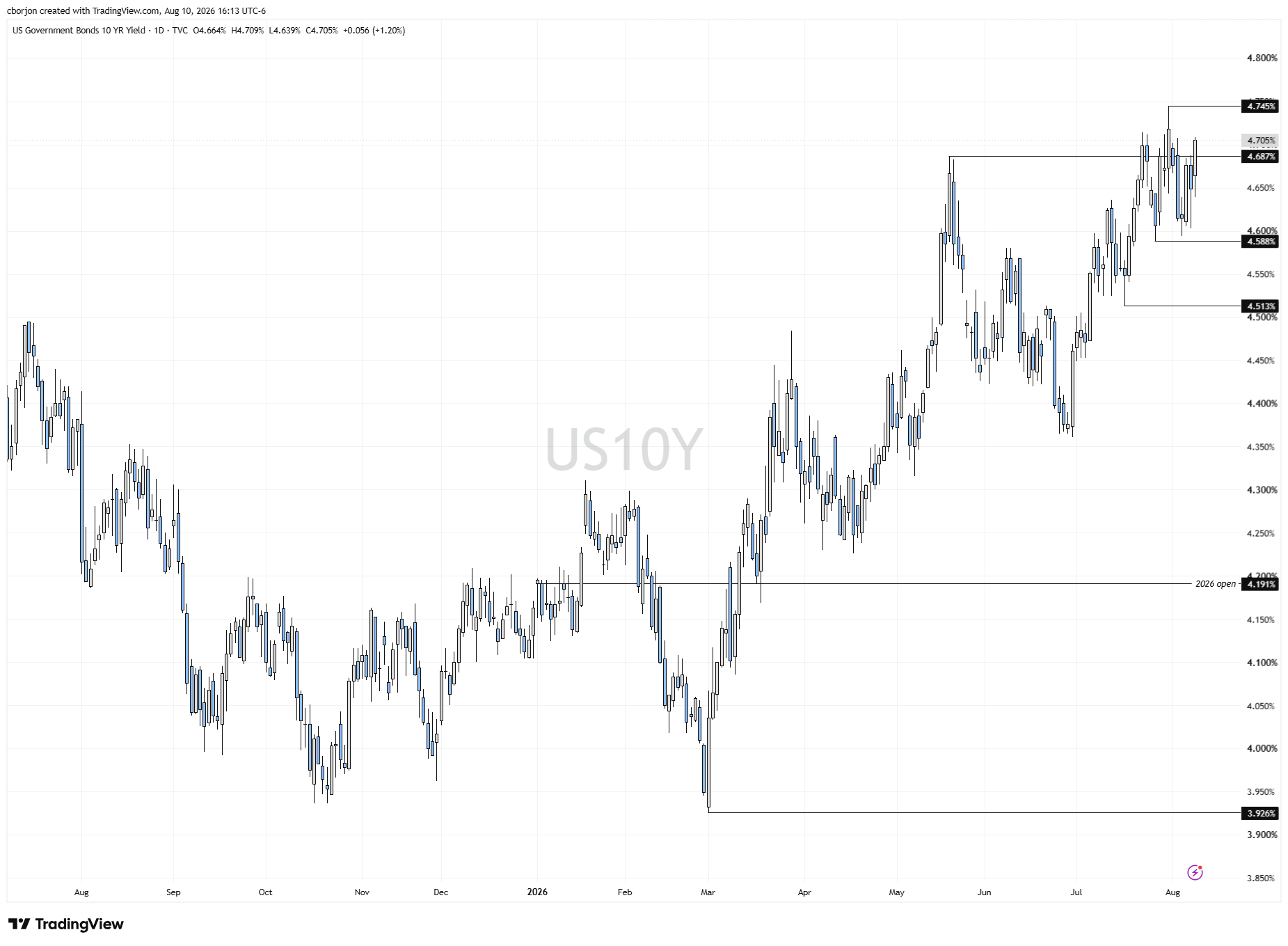
High energy prices sent US yields higher across the curve. The US 10-year benchmark note increases nearly six basis points to 4.705%, as West Texas Intermediate (WTI), the US crude benchmark, soars over 6.70% to $82.29.
July’s Consumer Price Index (CPI) is expected to decline slightly from 3.5% to 3.4% YoY. The core CPI, which excludes volatile items, is also projected to decrease from 2.6% to 2.5% YoY. The following day, on August 13, the Producer Price Index is similarly expected to ease.
The last US jobs report revealed some cracks, with the economy slashing 23K jobs, while the numbers for May and June were revised downward by 100K. This prompted investors to trim their hawkish bets on the Federal Reserve and now expect the US central bank to keep rates steady at 3.50%-3.75% towards the end of the year.
Prime Terminal data revealed that the chances of the Fed keeping rates unchanged at the September meeting stand at 65%, while the chances of a 26-basis-point rate hike stand at 35%.
The US Dollar Index (DXY), which tracks the performance of the buck’s value against six currencies, is up 0.20% at 99.81.
Alongside the release of US inflation data, traders are eyeing Initial Jobless Claims for the week ending August 8 and the University of Michigan (UoM) Consumer Sentiment.
US 10-year Treasury yield chart