


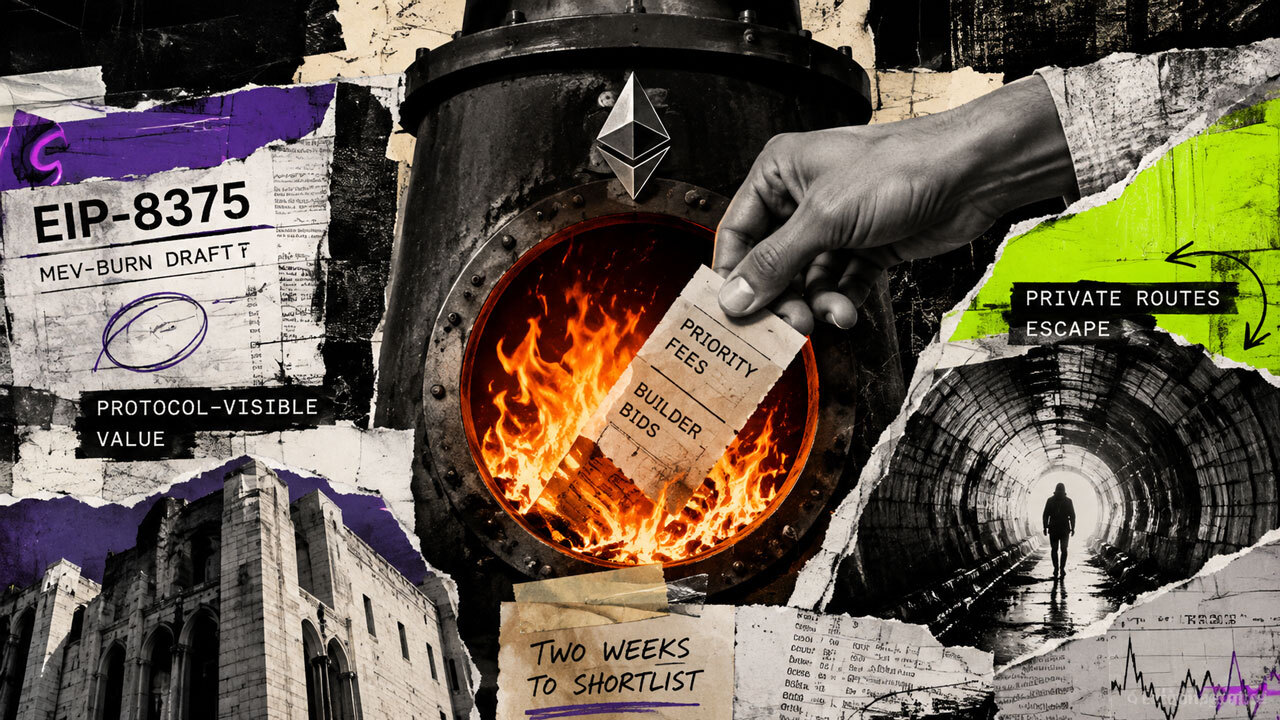

Ethereum developers are eyeing 2027 for Hegotá as they open a new public testnet for Glamsterdam, the network’s next major upgrade now targeted for the fourth quarter of 2026.
The timeline marks a shift from previous expectations. Earlier this year, the Ethereum Foundation said Glamsterdam was targeting the first half of 2026, with Hegotá expected to follow later in the year.
That timeline has since slipped, with developers only now launching Platåberget, a public testing ground for Glamsterdam. This testnet is designed to run for several months before the upgrade moves to Ethereum’s longer-lived Sepolia and Hoodi testnets.
Unlike earlier short-lived devnets, Platåberget gives developers and users a more stable environment to test the post-Glamsterdam network and identify problems before mainnet activation.
That testing is particularly important because Glamsterdam introduces breaking changes for some applications. Tools that assume a hardcoded maximum gas limit, including some wallets, indexers, and gas estimators, will need updates before the upgrade goes live.
Developers have two weeks to narrow Hegotá’s EIP proposals
While Glamsterdam is still months from the network’s mainnet, Ethereum developers are already shaping what comes next.
On Aug. 16, Ethereum researcher Toni Wahrstätter said network developers are currently assessing 66 proposals for Hegotá. However, he noted that only a fraction are likely to receive the implementation work, devnets, and testnets needed for a realistic 2027 release.
The Aug. 13 All Core Devs agenda gave developers roughly two weeks to narrow that field. Hegotá’s proposed-for-inclusion (PFI) list is expected to be finalized around Aug. 27, with proposals lacking a clear champion automatically deferred. Client teams have until Sept. 10 to submit their preference lists.
FOCIL, or EIP-7805, is currently Hegotá’s confirmed consensus-layer headliner. Frame Transactions, EIP-8141, remains under consideration, while dozens of privacy, scaling, validator, and EVM proposals are competing for limited implementation capacity.
Wahrstätter argued that Frame Transactions should join FOCIL alongside Keyed Nonces, EIP-8250, and Recent Roots, EIP-8272. Together, the proposals could give privacy applications more native protocol tools and reduce their reliance on intermediaries.
Frame Transactions would separate parts of transaction validation, execution, and fee payment, creating a foundation for more flexible account behavior. Keyed Nonces would allow independent nonce domains, while Recent Roots would let transactions reference recently verified state roots.
FOCIL addresses censorship resistance instead. It would allow committees of validators to require certain transactions in blocks, reducing specialized builders’ ability to exclude valid transactions.
Scaling proposals are competing for the same fork capacity. Wahrstätter highlighted EIP-8131 and EIP-8279 for repricing transaction and block data, alongside EIP-8368 for state-growth costs as Ethereum considers eventually raising its gas limit toward 600 million.
Other candidates include Quick Slots under EIP-8198, changes to ETH issuance and validator penalties, EVM improvements and simplifications, and some of the first zkEVM and post-quantum proposals to enter fork discussions.
Ethlabs, the independent Ethereum research lab launched in June by former Ethereum Foundation contributors and backed by BitMine, SharpLink and Ethereum co-founder Joe Lubin, has also begun making its case for what should survive the cut.
The group is championing Quick Slots as a first major step toward a faster Ethereum, arguing that shorter slots would speed transaction settlement, bridges and interoperability across the ecosystem.
It also wants Ethereum to keep increasing L1 capacity, rejecting the argument that existing block space is already underused. Ethlabs said scaling constraints prevent some applications from operating on mainnet at all, meaning higher capacity could expand the range of applications built directly on Ethereum.
The lab also strongly supports FOCIL and Frame Transactions. It described censorship resistance, or “openness,” as one of Ethereum’s core value propositions and called Frames the best native account-abstraction proposal for the L1.
However, Ethlabs said Frames still needs substantial work for Layer 2 networks so accounts can function consistently across chains. The group said it is working with the Ethereum Foundation and client teams to incorporate feedback from L2 developers.
Hegotá to remain tightly scoped
Meanwhile, Ethlabs said Hegotá should remain tightly scoped rather than absorb every proposal competing for inclusion.
The group argued that because Hegotá is shaping up to be an execution-layer-heavy fork, developers should apply a high bar to additional execution-layer EIPs and keep the consensus-layer side relatively light beyond FOCIL and Quick Slots.

A narrower fork, it said, would preserve engineering bandwidth and give client teams more room to prepare for larger architectural changes ahead.
That discipline led Ethlabs to recommend rejecting several proposals now under consideration.
One is EIP-8375, which would burn part of the gross value committed by selected external builder bids under Ethereum’s planned proposer-builder separation architecture.
Ethlabs warned that the mechanism could encourage more side-channel payments and said years of research into MEV-burn designs had yet to produce a proposal with broad consensus.
The group also placed EIP-8182, which would enable private ETH and ERC-20 transfers, in its lowest priority tier and recommended rejecting it for Hegotá.
Ethlabs described the proposal as a major change that would introduce zero-knowledge dependencies, arguing that such a feature should become a headline upgrade if Ethereum eventually decides to pursue it.
Those recommendations illustrate the broader problem developers now face. Hegotá has no shortage of proposals that could improve Ethereum individually, but trying to ship too many would increase implementation and testing demands and risk stretching the upgrade further into 2027.


