



Key Takeaways
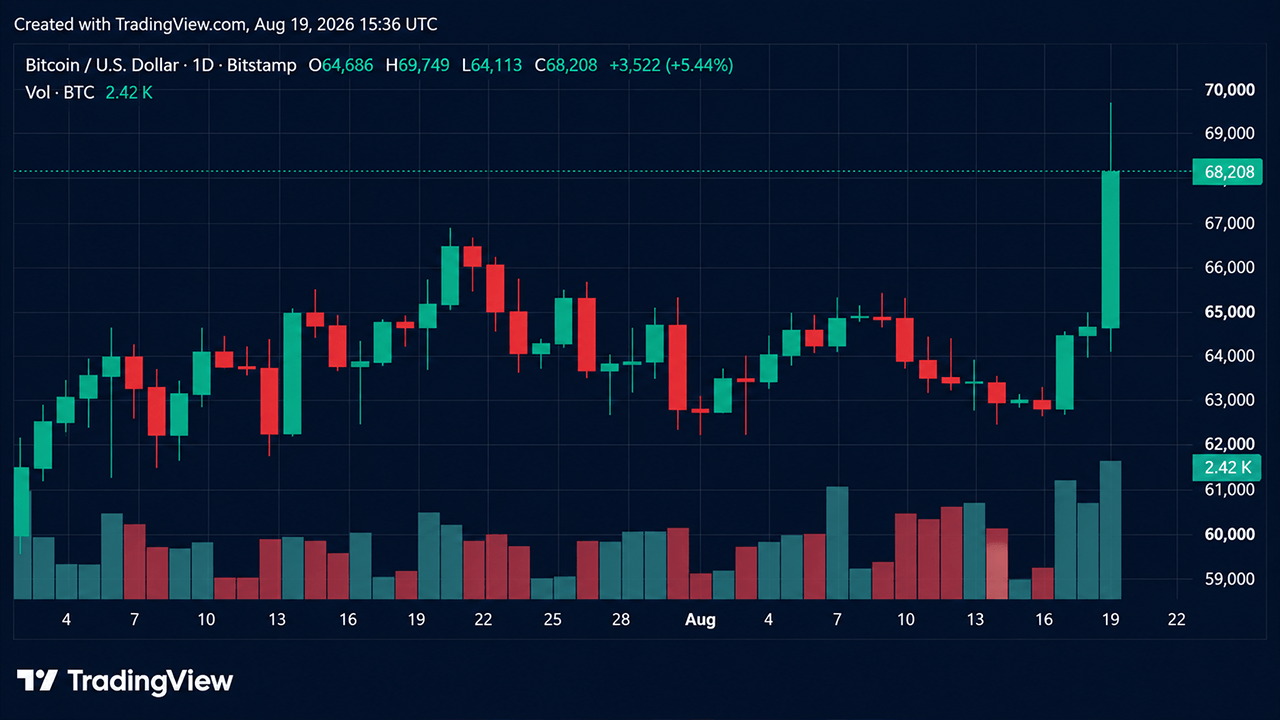
- Bitcoin hit $69,749 on Aug. 19 after weeks trapped below $65,000.
- Crypto shorts lost roughly $1.1B-$1.3B as bitcoin’s squeeze accelerated.
- Bitcoin must hold near $69,000-$70,000 as ETF demand and yields steer the next move.
The move unfolded rapidly during late morning U.S. trading. Bitcoin had spent weeks largely trapped between about $61,500 and $65,000, leaving volatility unusually low and traders increasingly positioned for the range to continue.
Treasury Move Lights the Fuse
One catalyst came from the U.S. Treasury, which said it would at least double the maximum size of liquidity-support buybacks for longer-dated Treasury securities, raising them from $2 billion to at least $4 billion per operation. The changes are scheduled to begin Sept. 9.
The announcement mattered because long-term government borrowing costs had been climbing sharply. The 30-year Treasury yield had reached roughly 5.33% to 5.34%, near its highest level in almost two decades, before retreating toward the low 5.2% range following the news.
Lower yields can make riskier investments more attractive by reducing the return available from government debt. Stocks, gold and bitcoin benefited as traders interpreted the Treasury move as easing some of the pressure building in bond markets.
The price of bitcoin also had another source of support. U.S. spot bitcoin exchange-traded funds had recorded a $297.6 million inflow the day earlier in the week, while market data indicated additional positive flows around Aug. 19.
Short Sellers Walk Into a Liquidation Trap
The real acceleration came from derivatives markets. As bitcoin pushed through $66,000, leveraged traders betting on lower prices began getting liquidated, meaning exchanges automatically closed positions that no longer had enough collateral to cover their losses.
Roughly $1.48 billion, according to Coinglass.com stats, in crypto short and long liquidations (majority shorts) within a 60-minute window. Those forced closures require short sellers to buy back exposure, creating additional demand just as prices are already climbing.
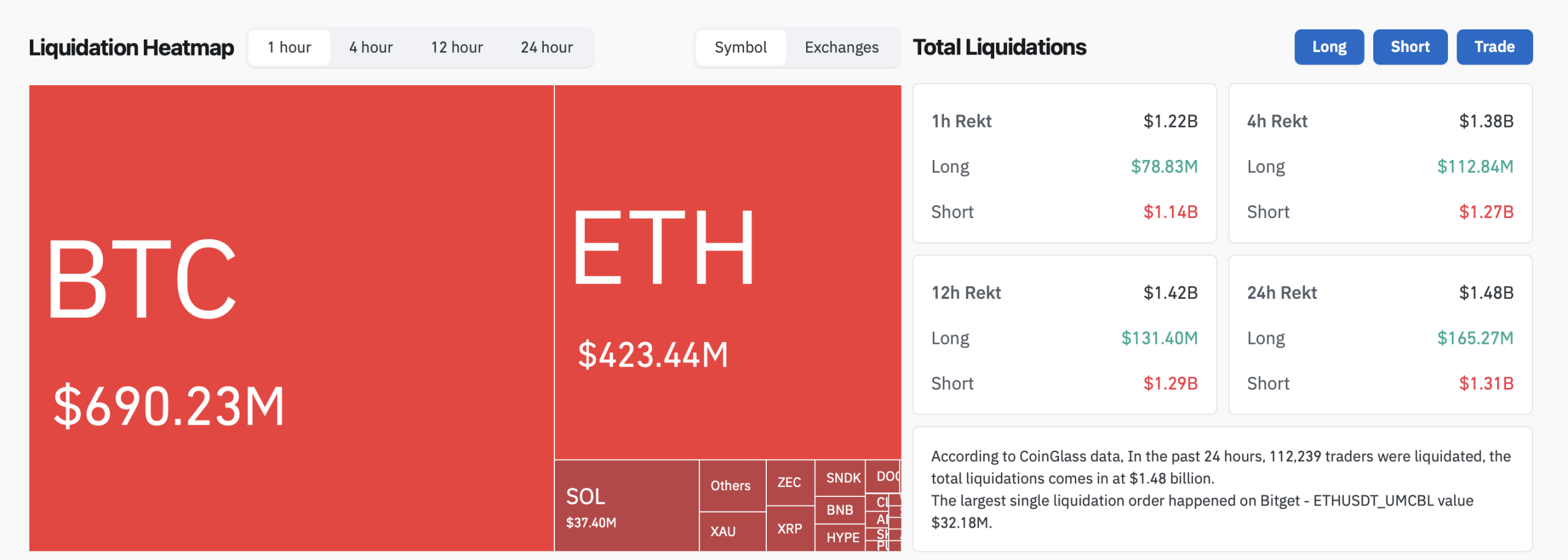
Leverage made the chain reaction more violent. A trader using 20-to-1 or 40-to-1 leverage can be wiped out by a relatively small move against the position. Each liquidation can push prices higher, triggering the next group of shorts and creating a self-reinforcing squeeze. Around 114,538 traders were wiped out over the last day.
Bitcoin’s jump carried it through levels not seen since earlier in the summer. The speed of the move also stood out, with the sharpest portion unfolding over roughly 15 to 60 minutes as trading volume climbed.
$70,000 Becomes Bitcoin’s Next Test
The question now is whether buyers can hold the gains once the forced buying disappears. Derivatives can produce spectacular candles, but maintaining a breakout generally requires sustained demand in the spot market, where investors purchase bitcoin directly rather than through leveraged contracts.
ETF flows provide one measure of that demand. Continued inflows, stable or falling Treasury yields and stronger spot trading could help bitcoin turn its former resistance zone around $66,900 into support and establish a firmer break from its multi-week range.
The danger is a reversal if leveraged traders pile into fresh long positions faster than underlying demand develops. Bitcoin’s immediate test is the $69,000 to $70,000 area, where traders will be watching whether the Aug. 19 spike becomes a durable breakout or another leverage-driven wick.
At 11:50 a.m. EDT on Wednesday, bitcoin is currently changing hands for $68,468 per unit.


