


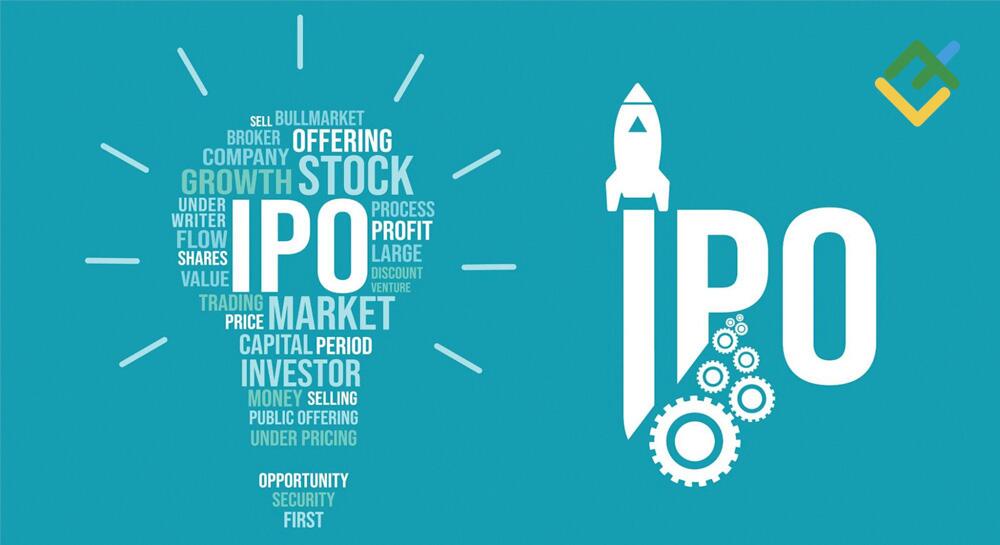


An IPO stands for Initial Public Offering. It is the moment a privately held company goes public and sells its shares on a stock exchange for the first time, opening them up to any investor.
What does IPO stand for in business? Imagine your neighbor has built a thriving business. Until now, only close friends and private investors could buy a stake in it. Now the company is going public, and its shares trade freely on the secondary market, open to public investors.
What is an IPO at its core? It is a business transitioning to the next stage of its growth. The company raises funds to expand, while investors become shareholders and stand to gain from price appreciation and dividends. However, there are risks involved. This article explains how an IPO works, how to profit from one, and which mistakes to avoid.
The article covers the following subjects:
Major Takeaways
- An initial public offering (IPO) is the first sale of a private company’s shares on a stock exchange.
- The company gets the capital it needs to expand, and investors get a stake in the business, with a chance to profit from rising share prices and earn dividends.
- An underwriter, usually an investment bank, manages the IPO, gauges investor demand, and sets the offering price.
- The IPO process includes filing the registration statement (Form S-1), holding a roadshow, collecting subscriptions, and listing the shares on a stock exchange.
- The largest IPO in history belongs to Saudi Aramco, which raised $29.4 billion in 2019.
- Investing in an IPO is risky. The IPO stock can swing sharply on the first day of trading.
- A lock-up period blocks insider sales after the IPO.
What Is an IPO?
An IPO is the first time a company lists its shares on a stock exchange. Until then, the business stays private, owned by its founders, employees, and early investors. After the IPO, anyone with a brokerage account can buy the shares. A publicly traded company gains access to public markets and can attract qualified professionals.
However, public status has a price. The company must report its financial statements regularly, submit to independent audits, and let shareholders vote on key decisions. Management is accountable to thousands of investors who watch every metric and respond fast when something changes.
SPACs, or special purpose acquisition companies, also exist. A SPAC is a shell company with no operating business of its own. It goes public to bring in capital, then looks for a private company to merge with.
Pros, Cons, and Risks of IPOs
An IPO opens up more than a funding channel. Shares become a currency for acquisitions, and employee stock options help keep talent on board.
The downsides are just as concrete. Financial disclosure and independent audits cost real money and take real time. The company loses flexibility, since every move is visible to competitors. Company founders can also lose control of the business.
Investors face real risks too. IPO shares swing sharply on the opening day, with the price soaring or collapsing by double digits. The lock-up period prevents insiders from selling shares immediately, but once it expires, supply increases and affects the stock price. Many companies stay stuck below their offering price for years. For the investor, that makes an IPO a high-stakes guess.
Volatility in the first months after listing is nothing unusual. The stock market is just beginning to assess the company, and a fair valuation takes time to settle. Meanwhile, the company reports every three months, with past performance held up against analyst forecasts. A single weak report can send the stock sharply lower.
Some founders keep control of their companies through super-voting shares. Google and Meta each have several classes of stocks, and a founder’s votes carry far more weight than their actual stake. Class A shares carry one vote, and Class B shares carry ten. The founders hold Class B, which keeps strategy and key decisions in their hands.
However, this structure limits the rights of minority shareholders. Investors in Google and Meta buy the stock knowing that Brin and Zuckerberg, respectively, retain control. The difference in voting weights shields the company from hostile takeovers.
Retail investors face a double-edged sword. Founder control keeps the business on course, yet an ordinary shareholder has no real say at the meeting. Most buy stock for returns anyway, not for the vote. And a strong founder is an asset in itself: Jobs, Musk, and Zuckerberg each grew their companies precisely because they stayed in charge, and the market pays a premium for that.
However, an inaccurate valuation can price the company below its real worth. Some firms therefore skip the IPO and list their shares directly on the exchange.
Why Do Companies Go Public?
Most companies go public because they need funding. Private companies often struggle to secure serious financing because loans incur interest, and venture capital funds demand control of the company.
First, in an IPO, a company issues shares and takes in billions of dollars that it never has to pay back. The money is spent on growth, whether that means new factories, deeper research, or a push into other markets.
Second, existing shareholders gain liquidity. Founders and early investors can sell a portion of their shares once the lock-up period expires.
Third, a listing brings prestige and visibility. A public company gets covered in the press, tracked in indices, and written up in analyst reports. That draws in customers and partners.
Fourth, shares themselves become a form of payment. In mergers and acquisitions, a public company can settle the deal in stock and keep its cash reserves intact.
Finally, an IPO unlocks employee stock options. Startups attract talent by offering a stake in the company down the line, and going public is what makes that stake worth something. When Facebook listed in 2012, thousands of early employees cashed in options they had held for years. Exercising options is a taxable event, and in the US it can fall under ordinary income tax or the alternative minimum tax.
There is a downside, though. After the IPO, founders lose some control, and shareholders expect steady quarterly profits. That pressure pushes management toward quick wins instead of long-term strategy. A company that fails to meet analysts’ expectations and the price target sees its stock price fall. This forces executives to lowball their forecasts. Experienced investors know that a modest forecast is usually a setup, so the company can beat it and impress the market. Therefore, you should not blindly trust top management’s forecasts. Judge management by what it does, not what it promises about future performance: track revenue, margins, and market share.
How Does an IPO Work?
Unlike a SPAC or a direct listing, a traditional IPO brings in fresh money. The company issues new shares, sells them to investors, and puts the proceeds toward growth. The whole process takes six months to a year, from hiring investment banks to the first day of trading. It covers due diligence, the prospectus, a roadshow with investment funds, the gathering of orders, and the final IPO price. The underwriter runs all of it, matching supply against market demand so the placement succeeds.
Key Phases of an IPO
Here is how the IPO process unfolds:
- Preparation. The company gets its books in order, brings in auditors and lawyers, and picks an underwriter. This is usually the longest stage.
- Registration. The company files Form S-1 with the Securities and Exchange Commission (SEC), which reviews the documents and clarifies details.
- Roadshow. Management presents the business operations to potential investors, drums up interest, and builds the order book.
- Pricing. The lead underwriter analyzes the demand and settles on an appropriate price. When demand exceeds supply, it can be pushed to the top of the range or above it.
- Listing day. The shares begin public trading on the exchange, and this is when volatility hits hardest.
- Stabilization. After the shares begin trading, the underwriter may take authorized measures to stabilize the price.
The lock-up period usually runs 90–180 days. It keeps the market from being flooded with shares the moment trading opens. Once it ends, company insiders and early investors are free to sell, and the price often dips as a result. Experienced traders look the date up in the prospectus well in advance.
The prospectus is the most important document for an investor. It sets out the company’s financials and its plans, and it deserves a careful read before you buy. One section is devoted entirely to risks, where the company must spell out everything that could go wrong, from dependence on key customers to competitive pressure.
Biggest IPOs in History
The history of IPOs holds both spectacular wins and costly failures. Here are the success stories:
- In 2019, Saudi Aramco raised $29.4 billion, an all-time record. The Saudi oil giant sold just 1.5% of its shares to reach that level.
- Alibaba brought in $25 billion when it listed in 2014, choosing the New York Stock Exchange for its debut.
- Visa collected $17.9 billion in 2008, proving that a strong business finds investors even in the middle of a crisis.
- Meta (formerly Facebook) raised $16 billion in 2012. The first year was rough, with the stock trading below its offering price. However, the asset recovered afterward and climbed much higher.
Some IPOs went the other way.
- Uber listed at $45 a share in 2019. The company’s stock spent its first few years trading well below that price.
- Rivian debuted at $78 a share in 2021, then slid all the way to $15.
- Birkenstock went public on the New York Stock Exchange in October 2023 at $46 a share. It dropped to $41 within hours and finished its first day at $40.20.
The lesson is simple. A successful IPO guarantees nothing. What matters is the business itself, not how well the roadshow was staged. There are also alternatives to the traditional IPO route.
The first option is a direct listing. The company puts its shares on the exchange without going through the traditional IPO process and without underwriters. Depending on how the deal is structured, existing shares may be sold, and in some cases the company can raise new capital as well.
Spotify and Coinbase both took this route. The upside is that no new shares are issued, so nothing gets diluted. The downside is that no underwriter guarantees demand. Spotify’s listing went well, with the price climbing quickly to $165.90. Eight years on, SPOT trades at around $500, and in July 2025 it reached $785.
The second is a SPAC. This is a shell company that lists on its own and then merges with a private business. It is faster than a traditional IPO, and investors pay a premium to the SPAC sponsors for that speed.
The third route is a private placement. The company sells shares to a limited group of investors without going public. It costs less, but the shares are not traded on an exchange, and the business stays private.
Every approach has its pros and cons, so it pays to know which one a company took. The route it chose shapes the shareholder base and the way the stock behaves once trading starts.
|
Company |
Year |
IPO Price |
2026 Price (split-adjusted) |
Result |
|
Microsoft |
1986 |
$21 |
$495 |
Success |
|
|
2004 |
$85 |
$346 |
Success |
|
Meta |
2012 |
$38 |
$590 |
Early drop, then growth |
|
Alibaba |
2014 |
$68 |
$124 |
Modest growth |
|
Uber |
2019 |
$45 |
$76 |
Years below IPO price |
|
Rivian |
2021 |
$78 |
$15 |
Failure |
|
|
2024 |
$34 |
$178 |
Success |
How to Invest in an IPO
Investors have two options.
- Buy in at the offering. This is mostly reserved for institutional investors. Retail traders can get in through brokers who receive allocations, but the amounts are usually small.
- Buy on the open market once trading starts. Just be ready for the volatility and the drawdowns that come with it.
Most investors never read the prospectus. Yet it is a free analysis, where the company itself reveals its weaknesses. AI tools handle the first pass well, though you should verify their conclusions against the original.
Before an IPO, review the financial data in the registration documents. The SEC requires companies to disclose revenue, costs, and cash flows to protect investors. Growing revenue is a good sign, but only one of several. Check the margin, meaning how much the business keeps from each sale. Check the debt too, and ask whether the business could survive a downturn.
Use fundamental multiples. The P/E ratio compares the share price with annual earnings per share, showing how many years of profit the price represents. The P/S ratio shows the same for revenue. Compare both with established companies in the same sector. New listings often trade at a premium to their peers, and overpaying just because a name is new to the market is a classic mistake. The market treats brands unevenly, pushing some prices too high and leaving others below what the business is worth. Once a couple of quarters pass and the euphoria fades, the price usually drifts back to its fair value.
LiteFinance offers CFDs on shares of major companies, including Amazon and SpaceX. You can profit whether prices rise or fall, and the demo account lets you practice with virtual funds.
Get access to a demo account on an easy-to-use Forex platform without registration
Keep a cool head when you assess the business. Read the prospectus, then compare the company with its rivals. Do not buy on impulse just because an advertisement at a roadshow was persuasive. Companies that have recently gone public are often overvalued in the first few months, so a good strategy is to wait for the first earnings report. That is when hard numbers replace speculation, and the price nears its fair value. If the company exceeds expectations, the stock will rise, and if it does not, the price will fall.
Do not forget about diversification. Do not invest all your capital in a single IPO. Spread your funds across several companies and asset classes, matching your asset allocation to your risk tolerance. Bonds, ETFs, and gold should all be part of your investment portfolio. An IPO is a lottery ticket, not a strategy. Proven assets should form the foundation of your portfolio.
Conclusion
An IPO opens up real opportunities. For a business, it is a way to raise capital. For an investor, it is a shot at exceptional returns. But nothing is guaranteed. Meta lost half its value within a year of going public. Rivian fell to a fifth of its listing price. Yet the success stories are just as numerous, with Microsoft, Google, and Reddit all soaring after their debuts. Read the prospectus and weigh the risks before you invest.
You can invest in IPOs through a brokerage account. LiteFinance provides access to trading CFDs on the stocks of the world’s largest companies. Start with a demo account and practice without risking your capital. Learn how to trade the stocks of newly public companies, and take advantage of high price volatility in your intraday trading strategies.
The content of this article reflects the author’s opinion and does not necessarily reflect the official position of LiteFinance broker. The material published on this page is provided for informational purposes only and should not be considered as the provision of investment advice for the purposes of Directive 2014/65/EU.
According to copyright law, this article is considered intellectual property, which includes a prohibition on copying and distributing it without consent.


