


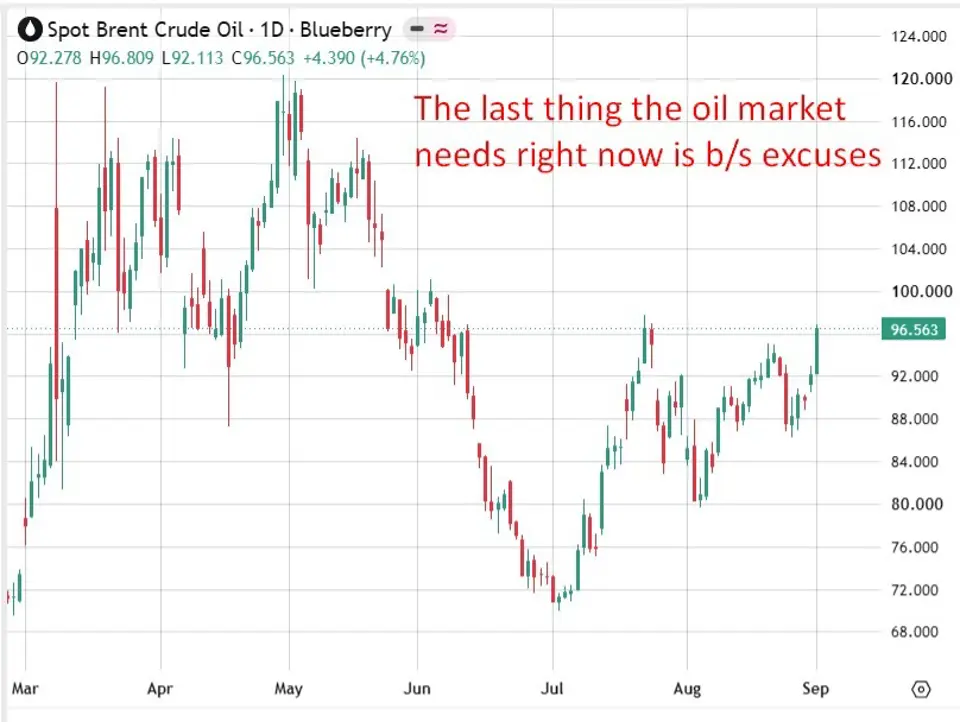

The delay strips traders and policymakers of the government’s most granular read on US crude production, imports, exports and state level output for several weeks at minimum. That gap matters more than usual given how tight the supply picture already looks, with the Strategic Petroleum Reserve at a 44 year low and Strait of Hormuz shipping still disrupted by the US Iran conflict. The Weekly Petroleum Status Report keeps headline inventory and supply figures flowing, so the market is not flying blind, but the loss of the fuller monthly breakdown adds a layer of uncertainty to output estimates at a moment when precision matters. Expect analysts to lean more heavily on private surveys and weekly data until the delayed report lands.
—
Private sector does not seem to be having a problem:
—
Before we go on, this guy knows more about oil than just about anyone else, and his take seems reasonable:
—
Washington’s most detailed window into US oil output goes dark for weeks at the worst possible moment.
Summary:
- EIA delayed release of the Petroleum Supply Monthly report for June 2026, originally due August 31, citing an operational issue
- New release expected sometime in September, with no specific date given
- Issue tied to how the EIA’s back end and public facing systems interact
- Report is the agency’s most detailed source on US crude production, imports, exports and inventories, broken down by state and region
- Weekly Petroleum Status Report continues on schedule, so some data remains available
- Delay comes as the Strategic Petroleum Reserve sits at its lowest level in 44 years, with renewed US Iran fighting disrupting Strait of Hormuz shipping
- EIA has lost an estimated 30 to 40 percent of its staff since the start of Trump’s second term, through buyouts, terminations, return to office rules and a hiring freeze
The US Energy Information Administration has delayed publication of its Petroleum Supply Monthly report for June 2026, the agency’s most detailed monthly account of domestic crude production, imports, exports and inventories. The report had been scheduled for release on August 31 but will now appear sometime in September, with the EIA declining to give a firm date, saying only that it wants to validate the data before publishing.
The agency attributed the delay to an operational issue affecting how its back end and public facing systems interact. It is the kind of technical explanation that, on its own, might attract little attention. But the timing has drawn scrutiny given how much rides on a clear picture of US supply right now. The Strategic Petroleum Reserve is sitting at its lowest level in 44 years, and a renewed round of fighting between the United States and Iran has kept oil markets on edge for months, disrupting shipping through the Strait of Hormuz and prompting Washington to draw down its own emergency stockpile to smooth price swings.
The Petroleum Supply Monthly is also the government’s only breakdown of domestic output by state and region, information not captured in the EIA’s Weekly Petroleum Status Report, which continues to publish on schedule. That weekly release keeps the immediate data flow from drying up entirely, covering inventories and broad supply metrics, but it does not substitute for the fuller monthly picture of how much crude producers are actually pulling out of the ground across the country.
The delay also lands against a backdrop of a much diminished EIA workforce. The agency has lost an estimated 30 to 40 percent of its staff since President Trump’s second term began, through voluntary buyouts, the termination of probationary employees, new return to office requirements and a government wide hiring freeze that has prevented it from backfilling departures. Whether the staffing reductions played any direct role in the systems issue is not something the agency has addressed, but the loss of institutional capacity adds context to a report that traders and policymakers alike rely on for one of the clearest windows into the health of US oil production.


