



Key Takeaways
- Bitcoin slipped about 1.5% to near $78,800 late yesterday after briefly trading above $80,400.
- Fed funds futures put roughly 57% odds on a September rate hike, up from 34.8% in late August.
- Spot bitcoin ETFs hold $101.25 billion in net assets, with Blackrock’s IBIT adding $3.575 billion in 30 days.
The Calendar Doing the Work
Three dates now stand between bitcoin’s price and a resolution of the range it has been stuck in.
The first is Sept. 10, when U.S. weekly jobless claims arrive. The second is Sept. 11, when the consumer price index (CPI) for August is published. The third is the Federal Open Market Committee (FOMC) meeting on Sept. 15 and 16, where the rate decision itself lands.
The job data and CPI stand to reprice hike odds going into the meeting, which means the market’s view of the Fed will likely have shifted twice before officials say anything at all.
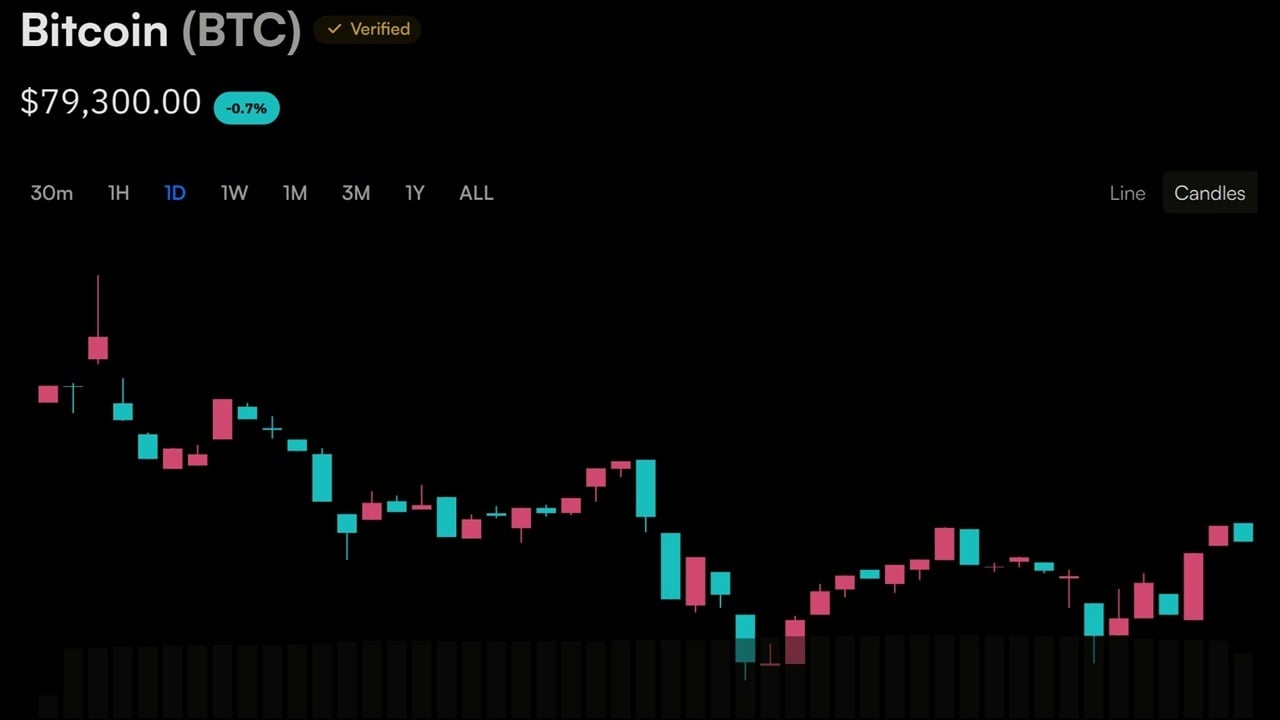
Bitcoin’s price has done little in the meantime, briefly pushed above $80,400 before fading, and is trading near $79,000 at press time, down about 1% since yesterday.
Why a Hike Is Even on the Table
The unusual feature of this setup is the direction of the risk because for most of the past two years the debate concerned the speed of cuts. Now it concerns whether rates go up.
To elaborate, the federal funds target sits at 3.50% to 3.75% and in late August, futures pricing implied a 65.2% chance the Fed would simply hold there, against 34.8% odds of a hike to 3.75% to 4.00%.
That balance has since flipped because as of yesterday, fed funds futures assigned roughly 57% probability to a hike at the September meeting, per CME Fedwatch data.
For risk assets, the implication is direct, as a hike tightens financial conditions into a market that has already run hard, while a hold, or softer inflation on Sept. 11, removes a weight that has capped every rally attempt since August.
There is precedent for caution as well. Of the 2026 FOMC decisions through August, three (in January, March and June) marked clear bearish pivots for bitcoin, with roughly $300 million to $500 million in mostly long positions liquidated around each announcement.
What the ETF Money Says
In/outflow data has been notably steadier than bitcoin’s price. To this point, spot bitcoin exchange-traded funds (ETFs) closed a recent session with $101.25 billion in net assets after taking in $174.60 million, led by Blackrock’s IBIT at $117.38 million and Fidelity’s FBTC at $57.22 million. Ether funds added $26.46 million against $15.57 billion in net assets.
Zoom out and the demand looks more durable still. IBIT alone absorbed $3.575 billion over 30 days, one weekly stretch drew $1.24 billion across crypto ETFs with bitcoin taking 79% of it, and August produced roughly $3.5 billion in net inflows, the strongest month of 2026 for the funds.
In sum, institutional allocation has kept accumulating through a period when the price has gone nowhere, which is why dips have been shallow even as every push toward $82,000 has failed.
The Technical Map Is Straightforward
Resistance sits in the $81,000 to $82,000 zone, the ceiling that has rejected repeated attempts. A close above $82,000 would restore momentum and open $85,000 as the next objective.
On the downside, first support runs from $77,000 to $78,000, a band that has absorbed selling several times since bitcoin’s price update at the start of September flagged $77,000 as the level to defend. Below that, the 20-day moving average near $75,500 becomes the reference point.
Between roughly $77,000 and $82,000, then, nothing is decided. Bitcoin gained close to 25% in August and has spent September giving none of it back while also adding nothing, a pattern that usually resolves violently.


