




Key Takeaways
- The CLARITY Act fell 11 votes short Tuesday, losing its cloture vote 49-50.
- H.R. 3633 stays on the Senate calendar, allowing John Thune to try cloture again.
- Congress can revisit the CLARITY Act, but January 2027 brings a legislative reset.
The Senate Never Even Got to Debate the Bill
After more than a year of negotiations, committee work, and political horse-trading, the CLARITY Act made it to the Senate floor Tuesday afternoon. Then the door stayed shut. The 49-50 cloture vote wasn’t a vote on whether H.R. 3633 should become law. It was a vote on whether senators should begin debating it at all.
Sixty votes were required. Without them, debate doesn’t begin, amendments don’t start flying, and there’s no final-passage vote waiting around the corner. The House had already passed its version 294-134 in July 2025, while the Senate Banking Committee advanced the legislation 15-9 in May.
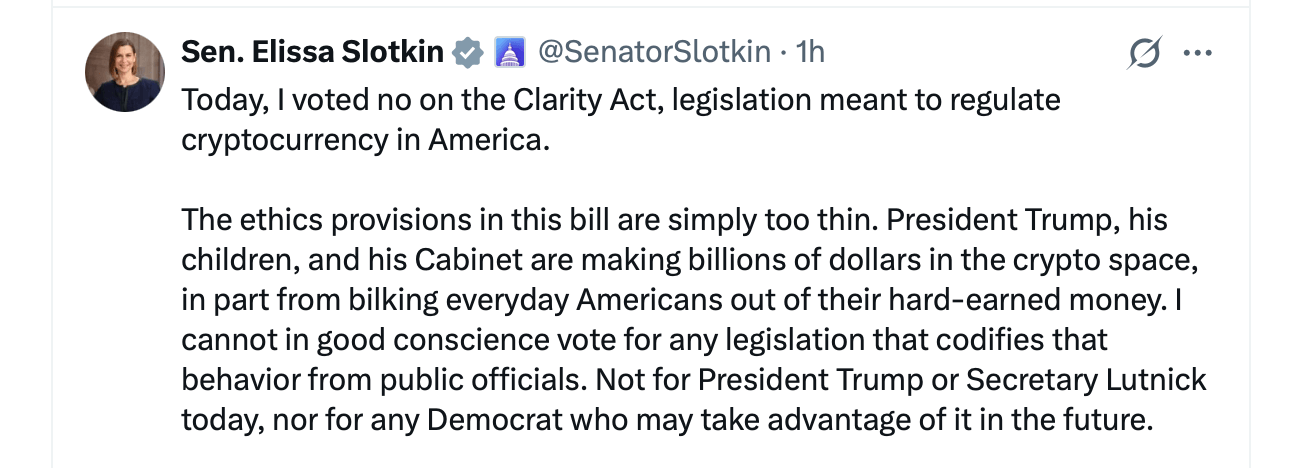
Democrats were not having it. For instance, Senator Elizabeth Warren (D-MA) stressed on X:
“Senate Republicans are trying to jam through a crypto bill that would let Trump continue lining his pockets off the crypto industry.”
First, the CLARITY Act Stays on the Calendar
Here’s the strange part: losing cloture doesn’t formally kill H.R. 3633. The legislation remains Calendar No. 423, meaning Senate Majority Leader John Thune can try again. He can file another cloture motion on the motion to proceed if supporters find additional votes, or pursue reconsideration of Tuesday’s failed vote. That’s the procedural route. The political route is considerably messier.
Every Democrat opposed advancement on Tuesday, while Republicans Susan Collins, Josh Hawley, and Jerry Moran also voted against cloture. Last-minute negotiations centered heavily on ethics restrictions involving federal officials and crypto interests, with Democrats arguing the proposed safeguards didn’t go far enough. Republicans argued that substantial concessions had already been made.
“This afternoon, Senate Democrats proved they were never truly serious about protecting consumers and preserving American leadership,” Senator Cynthia Lummis (R-WY) wrote after the vote. “I sat at the table with Senate Democrats working in good faith to get this done while they played games.”
Then the Calendar Starts Working Against It
The Senate is heading toward its pre-election campaign break, leaving supporters little room for another extended floor fight. Even another successful cloture attempt would only open the next stage. Senators would still have to debate the motion to proceed, get onto the legislation itself, deal with amendments and eventually clear another procedural hurdle before final passage. In other words, one vote wouldn’t suddenly fix this.
A post-election lame-duck session offers another opening, but the source material describes that route as a long shot rather than a plan. Congress will have spending and other unfinished business competing for floor time, while the same disagreements that sank Tuesday’s attempt would still be sitting there.
January Brings the Reset Button
If lawmakers don’t finish the legislation before the 119th Congress ends, the process starts over in January 2027. Sponsors would need to reintroduce market-structure legislation, move it through committees again and rebuild a Senate coalition capable of reaching the required threshold.
Meanwhile, the SEC and CFTC continue operating under existing law and pursuing their own crypto rulemaking agendas. The already-enacted GENIUS Act remains untouched.

Prediction marketplace bettors had already been leaning toward failure before senators voted. Now the legislative route to “clarity” has produced something Washington is exceptionally good at: another round of uncertainty.
“The once-proud Democratic party is anti-consumer and pro-illicit finance, anti-ethics, anti-free enterprise, anti-worker, anti-livable wage jobs, and pro-socialism. The Democrats are now anti-American. Sad,” Senator Lummis concluded in her X post.


