


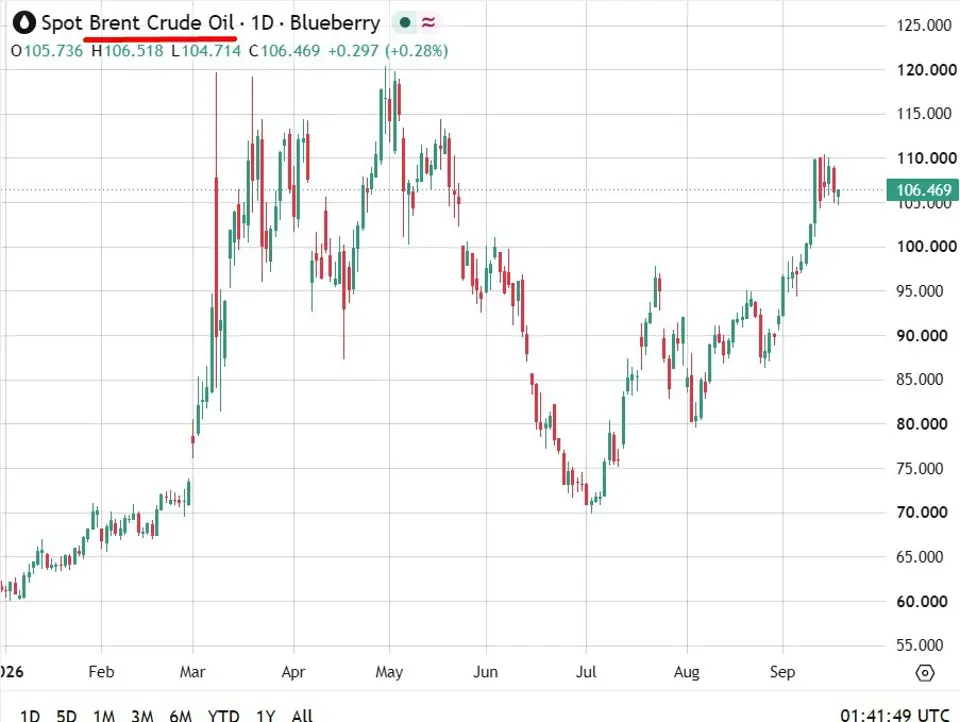

The pullback reflects a genuine easing of the acute supply shock rather than a resolution of the underlying conflict, since the Saudi workaround via Oman addresses the immediate loss of loading capacity at Yanbu without changing the fact that the East West pipeline itself remains damaged with no clear repair timeline. That distinction matters for how durable this move lower proves to be. With Houthi attacks on Saudi cities continuing and the group describing a rapid advance extending Iran’s reach in the region, the risk premium embedded in oil has room to reassert itself quickly if the Oman routing proves insufficient to offset further disruption, or if talk of easing tensions ahead of next week’s US China summit fails to materialise into anything concrete.
—
A Saudi workaround via Oman is taking the edge off oil’s supply scare, but the pipeline it’s routing around is still broken and the war it stems from is still spreading.
Summary:
- Brent fell 1.2% to $104.59 a barrel and WTI fell 1.1% to $101.29 by 0049 GMT Thursday, extending Wednesday’s roughly $3 decline
- Saudi Arabia is offering extra crude cargoes to Asian refiners via ship to ship transfers off Oman’s Sohar port, easing fears of a deeper supply hit
- Oil had hit around four month highs this week after reports Yanbu loadings were suspended and Riyadh cancelled some European cargo deliveries
- The suspension followed attacks on the East West pipeline feeding Yanbu, which became Saudi Arabia’s main export outlet after Iran’s Strait of Hormuz blockade
- Two East West pipeline pumping stations remain damaged from an attack last week, with no clear repair timeline
- Houthi forces continued drone and missile attacks on Saudi cities Wednesday even as prices fell, and Saudi warplanes struck Yemen in response
Oil prices fell further in early trade on Thursday, extending the previous session’s losses, after reports that Saudi Arabia is offering extra crude cargoes through Oman eased fears of a deeper supply disruption from the Middle East conflict, according to Reuters.
Hiroyuki Kikukawa, chief strategist at Nissan Securities Investment, said concerns over supply tightness eased slightly after news that Saudi Arabia would ship cargo via Oman. He added that expectations of progress toward easing Middle East tensions ahead of next week’s US China summit are also capping price gains. Saudi Arabia is offering additional crude loadings to Asian refiners through ship to ship transfers off Oman’s Sohar port, people familiar with the matter said, a workaround intended to blunt some of the hit to global supply from attacks on the kingdom’s East West pipeline to the Red Sea.
Oil had climbed to around four month highs earlier this week after shipping industry sources said crude loadings at Yanbu, Saudi Arabia’s Red Sea export hub, had been suspended, with Riyadh cancelling some cargo deliveries to European customers. That suspension followed attacks on the East West pipeline that feeds the port. Yanbu became Saudi Arabia’s main oil export outlet after Iran began blockading the Strait of Hormuz following the US and Israeli attack on the country at the end of February, a chokepoint that before the war carried around one fifth of the world’s oil supply. Two pumping stations serving the East West pipeline were damaged in an attack last week, and the repair timeline remains unclear, according to assessments from three oil and security sources.
Despite Thursday’s pullback, the underlying war shows no sign of cooling. Saudi warplanes struck targets in Yemen and Houthi fighters launched drones and missiles at Saudi cities on Wednesday, the Iran backed movement said, following what it described as a rapid advance that has extended Tehran’s reach across the Middle East war. That combination, a tactical supply fix easing near term price pressure against a conflict that continues to widen, leaves the durability of Thursday’s decline very much in question.


