


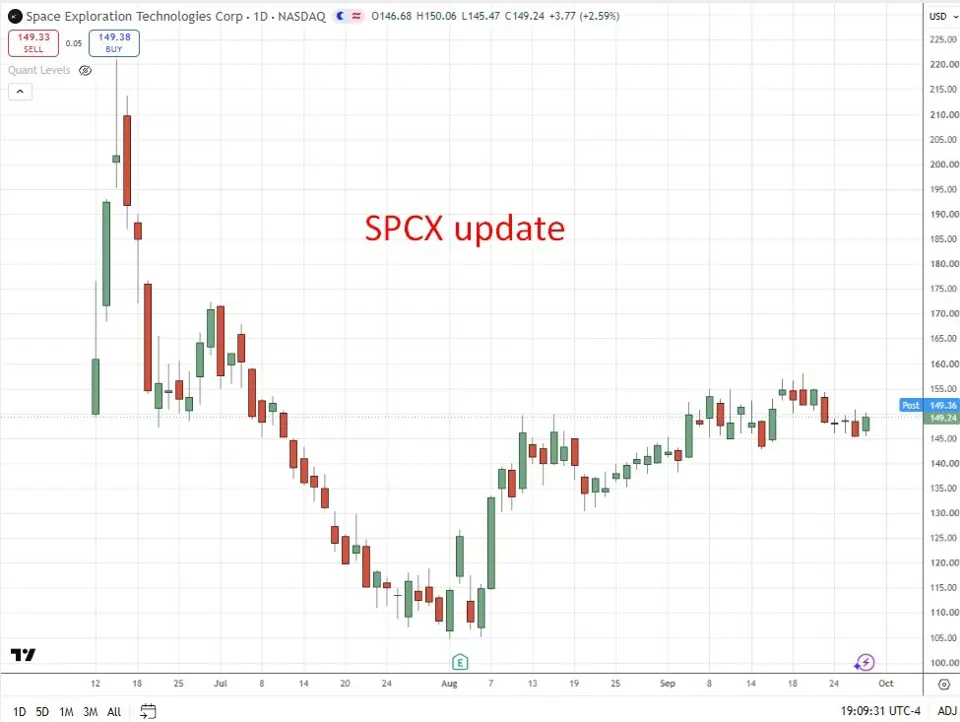

Citi’s long-term target implies a valuation of around $12 trillion against a current market capitalisation of around $2 trillion, which shows how much of the bull case rests on years of rapid growth and flawless execution. The near-term targets from Citi, UBS and RBC cluster between $200 and $225, so Tuesday’s gain suggests investors are treating the launch as a confidence boost rather than a re-rating on its own. The technical issues flagged by Deutsche Bank are the main counterweight, since any delay in fixing engine problems could push back the reuse and launch-cadence goals that underpin the forecasts. The next Starship flight, and whether SpaceX attempts to catch the vehicle, is the next test for sentiment.
—
Info comes via Dow Jones / Market Watch
—
A successful Starship flight has Citi arguing SpaceX is a step closer to a $900 long-term target, though that view rests on years of explosive growth and engine problems that still need fixing.
Summary:
- SpaceX delivered 26 Starlink V3 satellites to orbit on Monday on Starship’s 14th flight, its first revenue-generating mission and the first time the rocket reached orbit, despite a faulty engine.
- Citi says the flight is a step toward SpaceX shares (SPCX) being worth $900 or more, which would value the company at around $12 trillion, against a market capitalisation of around $2 trillion.
- Citi has a year-end target of $200, while RBC has a target of $225 and UBS rates the stock a buy with a target of $210.
- Citi expects 2030 revenue of around $485 billion and EBITDA of around $360 billion, above consensus of around $410 billion and $310 billion, and about $1 trillion of revenue in 2031.
- SpaceX shares rose circa 2.5% on Tuesday.
- UBS expects at least one more Starship flight this year and thinks SpaceX will try to catch the vehicle next time, while Deutsche Bank says booster engine issues and an early shutdown of a Raptor vacuum engine must be investigated.
Citi says the successful 14th flight of Starship is a step toward SpaceX shares reaching $900 or more, according to MarketWatch. That level would value the company at around $12 trillion, more than twice the size of Nvidia today, compared with SpaceX’s current market capitalisation of around $2 trillion. SpaceX shares (SPCX) rose circa 2.5% on Tuesday.
SpaceX launched Starship on Monday for the first time since July and, despite a faulty engine, managed to put the rocket into orbit for the first time. The vehicle deployed 26 Starlink V3 satellites, the first revenue-generating mission for Starship and what the report described as SpaceX’s first meaningful payload. Citi called the mission a major milestone and said the company’s launch capability is the foundational competitive advantage that enables its other businesses. The bank added that the flight brings SpaceX closer to unlocking the full valuation of its artificial-intelligence and connectivity units, both central to its $900 long-term target and its $200 target for the end of the year.
That long-term view assumes very rapid growth. According to FactSet, Wall Street expects SpaceX to report around $44 billion in sales in 2026 and around $21 billion in EBITDA, or earnings before interest, tax, depreciation and amortisation, an adjusted profit measure that ignores certain costs. Citi expects 2030 revenue of around $485 billion and EBITDA of around $360 billion, above the consensus view of around $410 billion and $310 billion. For 2031, it forecasts about $1 trillion in revenue, in line with a prediction from chief executive Elon Musk. Starship will not generate most of that revenue but is expected to enable it, as it can carry dozens of advanced Starlink and AI satellites, and the company wants to launch thousands of rockets a year from a planned spaceport in Louisiana.
Other banks were also positive. RBC said the launch should be seen as a positive for the stock and has a target of $225. UBS rates SpaceX a buy with a target of $210 and expects at least one more Starship flight before the end of the year. It thinks SpaceX will attempt to catch the vehicle on its next mission using the launch tower’s chopstick arms, which is key to making Starship rapidly reusable, and says that combined with the Louisiana spaceport it could create a steady cadence of launches in 2027.
Deutsche Bank struck a more cautious note. It said SpaceX must work out what is behind the booster’s engine issues and find the root cause of the early shutdown of one of Starship’s Raptor vacuum engines, a problem that nearly led the company to abandon its plan to reach orbit.
The next Starship flight, and whether SpaceX attempts a catch, will be the next test of whether the launch cadence behind these forecasts is achievable.


